Don’t miss this student art

Don’t miss this student art

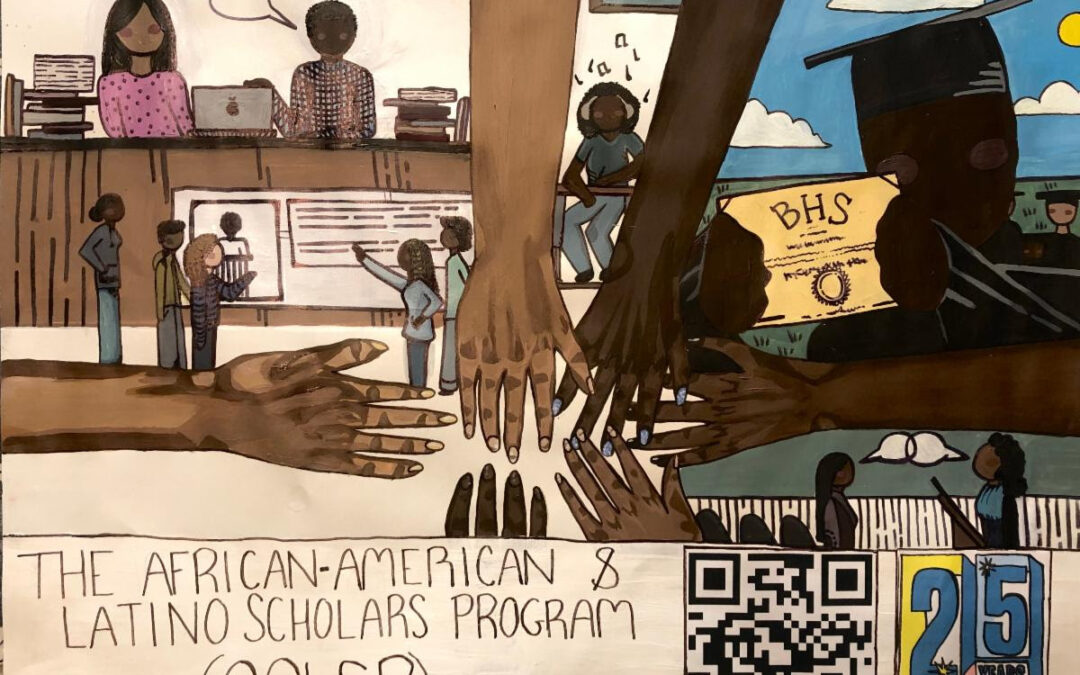
To help celebrate the Fund’s 25th anniversary, BHS Senior Stella Charbonneau created this series, featuring several Fund-supported courses and programs. Do they look familiar? We’ve showcased them as lawn signs around campus and town, and displayed them at the 25th Anniversary Celebration this fall.

Want one for your home or business? Just email us and we’ll deliver it to you. Senior Katherine Dougan also created a series, which we’ll share in a future email. Stay tuned!

Sharing Innovation Fund courses, programs, and efforts as we conclude 22-23…

Sharing Innovation Fund courses, programs, and efforts as we conclude 22-23…

Dear BHS Parents, Guardians, and Caregivers,

I have pledged further communication as we end the year and am trying my darndest to follow through and share more information as we end the 2022-23 school year. One point of pride for me as I end another year at Brookline High School is how we create, refine, and institutionalize excellent courses, programs, and thinking. We certainly innovate within our high school and district budgets. At BHS, we are fortunate to have powerful, generous partners like the BEF, PTO, Brookline Community Foundation, and many more.

I write this afternoon to share about the impact of Brookline High School Innovation Fund programing on our students, staff, and school community. Below is an attempt at capturing which programs and courses the Brookline High School Innovation Fund helped bring us in 2022-23, including what we integrated into the PSB budget and what we have planned for 2023-24. These are exciting times, and I am glad to have the Innovation Fund as a key partner in creating the school culture and program our young people need and deserve.

Please note some of the course and program descriptions are pulled from the Innovation Fund website; while I sign this communication, my hand is one of many within the fund and across our school district who help our educators chase their best ideas for helping young people feel as though they belong and will be engaged, challenged, and supported to learn and grow as students, citizens, and human beings.

New Program for 2023-24: Queer Student Program

I am excited to announce the creation of The Queer Student Program (QSP), a new addition to BHS designed to support LGBTQ students throughout their experience at the high school. For decades, the student-run club known as the Gender Sexuality Alliance (GSA) attempted to fill this role, but as the LGBTQ student body at BHS has grown, it has become increasingly necessary to also expand our support system for this community. The new Queer Student Program includes two course offerings: a new Wellness course and a 12th grade elective called “The History & Science of Sex and Gender.” The QSP also offers critical affinity programming.

Starting next year, there will be a 9th grade Hub/Advisory class specifically for LGBTQ students. We will also launch the “OUTstanding Speaker Series” in collaboration with other school affinity groups, such as African American and Latino Scholars Program (AALSP) and the AAPI Leadership and Affinity Program (LEAP).

The Queer Student Program is the brainchild of teachers Stephen Eesley (Social Studies), Kate Leslie (Social Studies), and Julia Mangan (Science). Stephen, Kate, and Julia worked closely together and with members of the Wellness Department to create programming and course offerings for our LGBTQ students. The QSP provides very concrete ways for our LGBTQ youth to be seen and heard, engaged and supported.

Using Innovation Fellow work to Re-develop Social Justice

During the 2022-23 school year, School Within a School English teacher Keira Flynn-Carson served as our Innovation Fellow. Keira has been at BHS since 2004 – as an English teacher, Special Educator, SWS leader, and force for goodness. As part of Keira’s Innovation Fellowship this year, she explored ethics as a critical force in driving change – primarily in the area of sex and consent education but also in a wide array of human relationship contexts.

This interesting and important work will now find a home in a reimagined Social Justice course at BHS. The program will involve academic study (Psychology, Ethics, History, Sociology) as it relates to social justice topics and movements and prepares students to take action through internships and school/community improvement projects – all guided by the ethics of care.

The Social Justice Leadership Program was conceived in 2007 with support from the Brookline High School Innovation Fund. Roger Grande and Kate Leslie have taught and led the program since then. With Roger now focused on Global Leadership (another Innovation Fund program) and Kate helping lead the newest Fund venture (QSP) Social Justice needed new leadership. Keira’s work on ethics within her Innovation Fellowship seems like an ideal lens through which to re-think Social Justice post-pandemic and impact Brookline High School students for years to come.

Continuing in 2023-24: SEL-T, Data Science, and Climate Science

Social Emotional Learning Tutorial (SEL-T)

In 2002, the Innovation Fund seeded BHS Tutorial to support students needing individual, content-based tutoring in academic subjects. With student social-emotional needs rising dramatically in recent years, particularly in the wake of the pandemic, BHS faculty will continue to pilot a social-emotional learning section in the existing Tutorial structure. SEL-T helps students with social-emotional challenges learn to identify stressors, and develop coping and self-regulation strategies to support academic and social success at school. From this pilot, BHS faculty plans to train more faculty in SEL pedagogy with the hopes of integrating SEL into courses across the curriculum.

Data Science and Social Justice

This data science course, proposed by the Math Department in collaboration with Special Education, uses problems related to a variety of social justice topics to learn the skills necessary to analyze data, understand sampling, distinguish correlation from causation, recognize bias, and use probability and modeling to create and support data-based arguments. Topics may include social justice issues related to racism, healthcare inequities, political underrepresentation, and gun violence. Students learn how to use spreadsheets, coding (python or R) and data analysis technology to aid them in their research.

Climate Science and Social Solutions

​​Climate Science and Social Solutions is an interdisciplinary, team-taught senior-year elective with instruction from both the scientific and historical perspectives. The course enables students to engage in project-based learning by analyzing real world policy options related to climate change, and then research and posit definable and effective solutions. The goal is to have seniors engage in advocacy campaigns designed to shape perceptions on climate change and encourage personal mitigation strategies.

Integrated into the BHS/PSB Budget

Creating new courses, programs, and curricula is part of the Fund’s core mission. As a school and school system, we need to figure out how to institutionalize what the Innovation Fund helps our educators create and refine. This way, Brookline students can continue to enjoy and benefit from Fund-born programming for years to come.

Hub Advisory

Hub/Advisory, supported by an Innovation Fund grant in Fall 2019, has as its principal goal community building among students and a faculty advisor in a non-evaluative setting. During the pandemic, it became an important source of support for isolated students and an opportunity for teachers to reach out to build connections with students in a different environment. As pandemic disruptions and construction delays limited the original vision of Hub’s implementation, this grant extension will allow faculty to train new faculty to be advisors and expand the program into a four-year experience for BHS students.

Rethinking the Restaurant (Tappan Green)

Rethinking the BHS Restaurant integrates a long-time high school program more cohesively into curricular and co-curricular experiences for the entire BHS community, with students taking the lead in running its business operations in meaningful and creative ways. Faculty are excited by the multifaceted opportunities for innovation where the restaurant has potential as a lab for interdisciplinary learning with a social impact lens. For example, the restaurant could be a place where English Language Learners could introduce dishes from their home cultures as a special menu item; World Language teachers and students could work with the culinary program to design “take-over” menus for cultural observations or holidays; and students in Social/Food Justice or Environmental Action clubs could team with our culinary program to understand and improve how to sustainably run our business. Rethinking Restaurant opens up outstanding experiential learning opportunities for students not only in the restaurant itself, but also for a diverse range of students in clubs, courses, and throughout the campus.

This summer, Britt Stevens, our Curriculum Coordinator for Career and Technology Education (CTE) is pulling together an Innovation Summit for high school faculty and staff that focuses on Beginnings and Endings. The summit, funded by the BHS Innovation Fund, will help us move forward with ongoing work to re-think ninth grade at BHS as well as how we might continue to re-consider senior year. Ninth grade and senior year are critical priority areas for Brookline High School in the next three years, and I am excited and grateful that the Innovation Fund will help us brainstorm ideas and eventually turn them into concrete, engaging learning experiences for our students, current and future.

Thanks much and take care,

Anthony Meyer, Head of School

9th Grade Physics Reimagined: A Spotlight on Experiential Physics

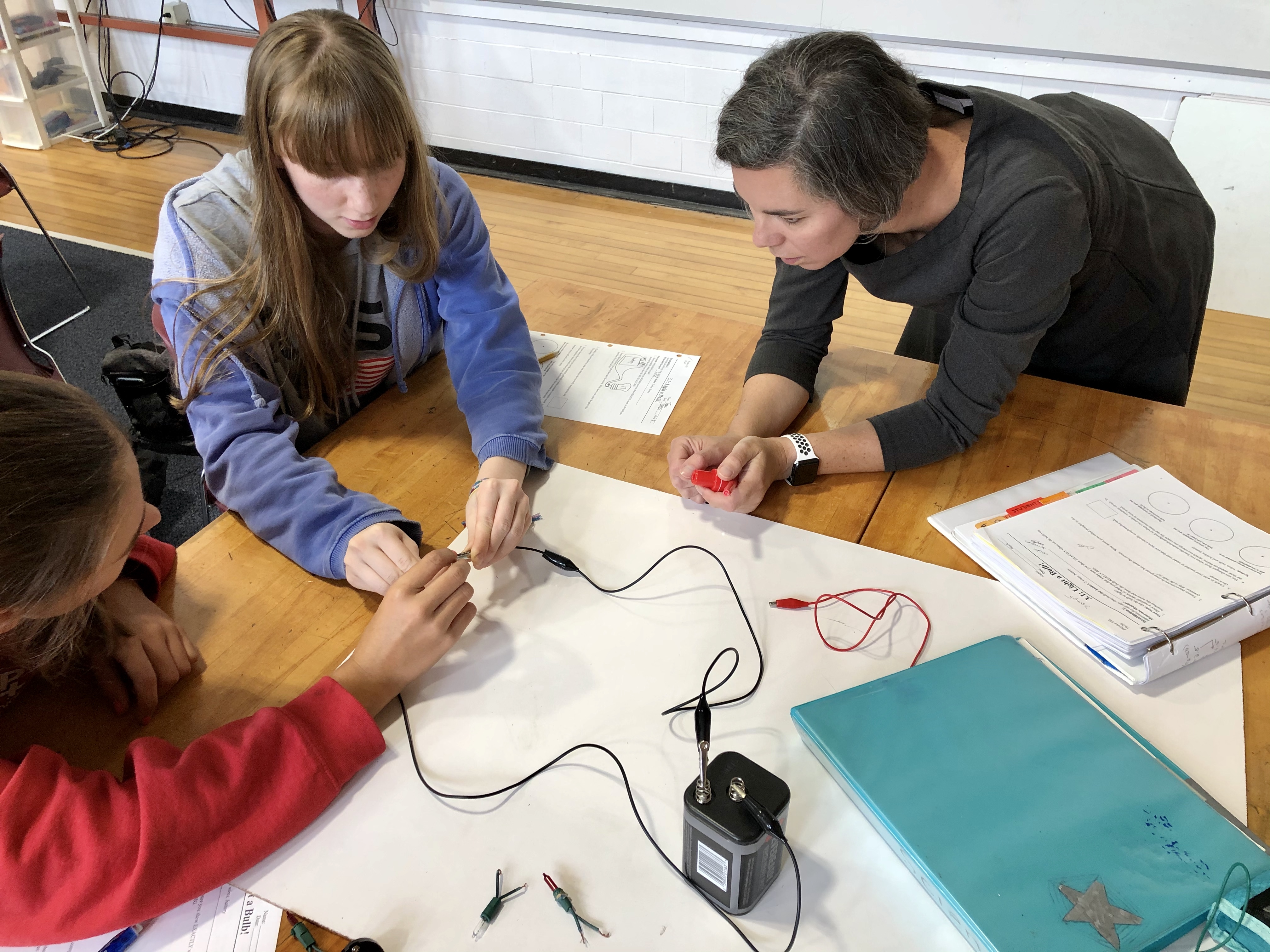
Jen Spencer with Physics StudentsIn 2019, BHS launched Experiential Physics, a three-year pilot program to develop a new curriculum for 9th grade Physics, supported by a grant from the BHS Innovation Fund. The redesigned course develops scientific, engineering, and entrepreneurial skills and teaches students collaborative, real-world approaches to designing solutions to today’s scientific problems. We caught up with three physics teachers, Julia Mangan, Jennifer Spencer, and Stacy Kissel, who shared their views on the new Experiential Physics course curriculum and teaching approach. Their collective insights are captured in the Q&A below.

Q: Why was it important to redesign the physics curriculum?

State standards and practices now call for an increased focus on the skills students develop in 9th grade physics. As a result, we were inspired to reimagine learning in 9th grade physics to be more applicable to physics in the real world! Our approach has become less teacher-driven and more student-focused. We attended two intensive training seminars to learn more about the Modeling Approach to teaching physics and how to teach students to work together collaboratively, take risks, and communicate productively.

Students will participate in a variety of projects, activities and labs to give them a broad sense of what it means to “do” science—this emphasis was missing from our previous curriculum. We are developing the “story of physics” through multiple lenses including student learning through content, skills development, and the many different “hats” students wear throughout the year.

Q: What are some of the new ways you are covering physics material?

We wanted students to learn physics through doing and not just learning facts, placing greater value on the process of science. We’re spending more time teaching students more explicitly how to ask questions like scientists do and how to answer them right in the classroom. We’ve added more hands-on experiments in which students test hypotheses and carry out procedures, analysis of data, and online research.

We have created and piloted a new project across the 9th grade asking students to apply content learned in the waves unit (sound, light, etc.) to explain how organisms use waves to communicate and sense the world around them. Students can take a deeper dive into how the content connects to the real world, both with how human ears and eyes work as well as how other organisms have evolved different ways to use sound waves and light waves for sensing and communication.

We will also be doing a unit on nuclear physics at the end of the year. This is a topic we have not previously taught to freshmen.

Q: How does the new curriculum impact the experience of students?

The goals for student learning are to push beyond learning about science and to focus on learning how to do science. This involves many skills that scientists employ, such as learning how to ask good questions, using discussion skills to make good predictions, designing experiments that answer their questions, using research tools to see what other researchers have learned, and creating mathematical and computational models that describe the real world for the purpose of answering questions.

We’ve received informal feedback from students that they love learning this way! We are regularly hearing students refer back to the common experience of each unit as they make new connections that push their understanding deeper.

Our activities and projects are designed to better meet the needs of all students regardless of background knowledge. For example, students who typically aren’t engaged in the learning of science, but loved tinkering with circuits, spent time creating a complicated device that worked in unique and challenging ways.

Q: What have you learned in the first few months teaching the new curriculum?

It has been so exciting to have the time and opportunity to be creative in defining this shift in science instruction!

We’re still trying to cover the same breadth of physics material but deeper learning requires more time for students to both learn and practice the skills of a scientist. Students seem excited to apply their knowledge through in-depth projects (so far, building a complex working circuit and researching an organism’s ability to create and use sound/light waves).

Rolling out a new curriculum has pushed us to collaborate more closely across our 9th grade physics teachers to create a more consistent experience for students. We’re creating a central place and strategy for documenting the what, the how, and the collective wisdom of the physics department. We have managed to capture most of what teachers are doing in their classrooms and, in year 2, we will evaluate and refine this documentation.

Q: How will the BHS expansion with updated classrooms and the new STEM wing support this course?

The new classrooms will be larger and more effectively designed than the previous ones at BHS. Desk seating will be in the middle of the room and tall lab tables will be located around the perimeter. Separate instruction and lab work areas will allow students to set up and leave long-term experiments, or exploratory stations, out and accessible in the classroom for longer periods of time. This will provide students with more opportunities to explore something in the beginning at the surface level, and then go back to it throughout the unit as they learn more and are able to ask deeper questions.

Global Leadership fundraises for Turkey after earthquake

Global Leadership fundraises for Turkey after earthquake

For members of the Turkish and Syrian diaspora, Feb. 6 will mark a day of mass destruction and devastation. The 7.8 magnitude earthquake along the Turkey-Syria border left millions displaced, thousands dead and put reconstruction costs in the billions.

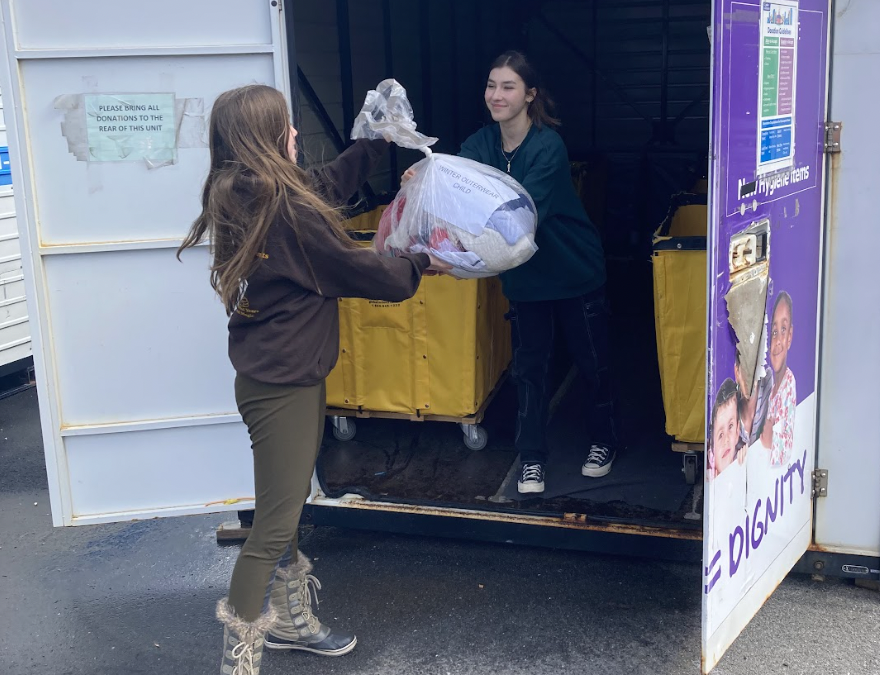
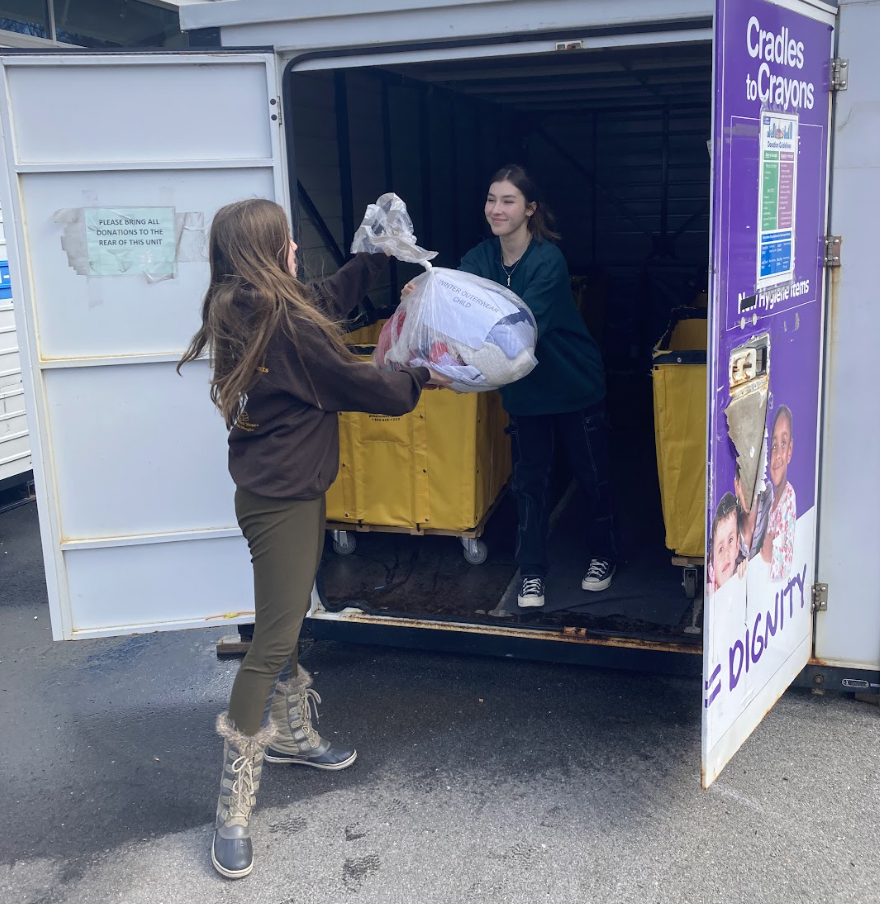
Within a week of the disaster, students in Global Leadership, an elective course designed to educate students about modern-day challenges across the world, shifted their efforts to aiding the crisis. The class organized fundraisers, set up donation centers and spread awareness around the community.

Sophomore Sasha Harwin, a student in Global Leadership, said that despite the project being teacher facilitated, students took initiative and led the fundraising process.

“When we learned about the earthquake, we dropped everything else and immediately started to brainstorm ways we could help Turkey and Syria. Going in, we already knew there were going to be donation aspects, but we also wanted to put a big emphasis on spreading awareness around the school,” Harwin said.

Due to the urgency of the issue, the class had minimal time to prepare and organize logistics. They ultimately broke up into four separate groups to cover all bases: awareness, publicity, in-kind donations and monetary donations. Harwin said that each student was able to choose their own group, and everybody remained passionate about their work.

“The whole thing came together so fast and everybody stayed accountable,” Harwin said. “It’s a real and dire issue, so everyone was willing to help out in their free time.”

Harwin was a member of the awareness team, and gave presentations to World Language classes to generate more attention on the issue. Harwin and her team also reached out to all Brookline Public Schools to set up more donation centers. Despite only successfully connecting with Baker and Florida Ruffin Ridley school, she said that the team still managed to amass nearly twenty large bags of clothes, tents and blankets.

The class initially planned to send the in-kind donations to the Turkish embassy; however, their recently updated donation requirements forced the group to look elsewhere to donate. Harwin said that although she is disappointed with the unexpected change, she is still happy to know that they are able to donate everything to Cradles-to-Crayons and On-the-Rise, two local and dedicated organizations.

“It still feels so empowering because for most projects we do, we just talk and learn about big disasters in the world, but this felt so real because we’re actually going to make a difference for the first time,” Harwin said.

For junior Yoni Tsapira, a member of the monetary donations team, fundraising was also a new experience that he said will stick with him. His group managed to raise over $9,000 dollars through a GoFundMe page in two weeks and was only a few hundred dollars short of their ten-thousand dollar goal. He said that the GoFundMe is still active, but the class is planning to deposit their donations to UNICEF soon, a United Nations agency dedicated to providing humanitarian and developmental aid to children.

“It’s really cool to know that we as high school students can have a real impact,” Tsapira said. “If you think that you’re just a teenager and can’t do much, well, you can—because we just did something.”

Global Leadership teacher Roger Grande said that overall, he considers the fundraising efforts to be a major success for reasons beyond just the money raised.

“It was great that we achieved our goal, but it was so powerful because the students saw what they could do; it was both a real life effort and a classroom effort,” Grande said. “What I wanted them to take away from this project is what I want them to take away from this class in general: that they are insightful, their thoughts are real, and that they are powerful; that they are changemakers.”

Sophia Su, Staff Writer https://thecypressonline.com/

Brookline Lens seeks to be flexible amid COVID-19 issues and cancellations

Brookline Lens seeks to be flexible amid COVID-19 issues and cancellations

The surge of the COVID-19 Omicron wave is threatening to shut down many businesses and school events. Despite the surge, Brookline Lens is adapting as they persist to fulfill their clients’ requests.

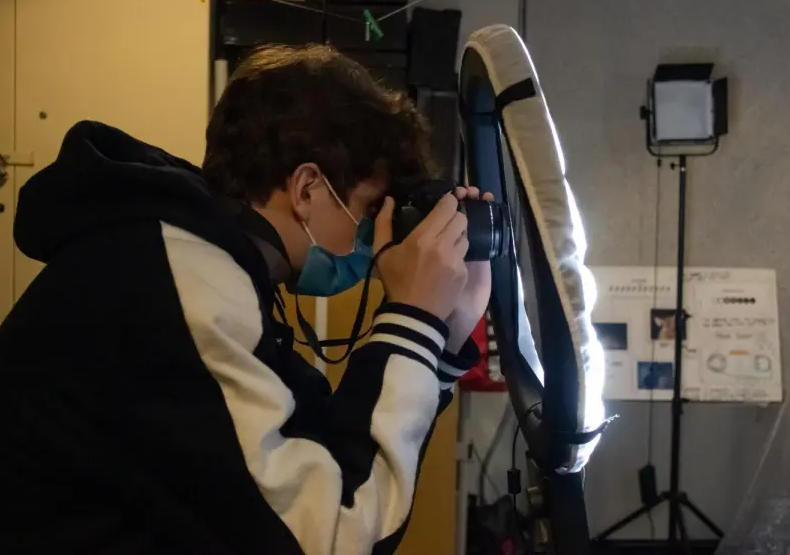
Launched in the fall of 2019, Brookline Lens is an optional semester or full year course which provides students the opportunity to produce free photo and video projects for the high school and the greater Brookline community.

These projects include an informational video on Tappan Green, a mini documentary for the Brookline Recreation Center and a video for the PTO.

On Jan. 12, Brookline Lens had to cancel their launch party for the second time in a row due to issues with COVID-19.

IMG_3984Gallery • 4 Photos
Bezawit O’Neill, a junior who is one of the project managers, said that the launch party was meant to advertise Brookline Lens to students interested in joining and future clients who may want their services.

“I was part of the group that was in charge of the slideshow presentation,” O’Neill said. “If people wanted some project done or seniors wanted their senior portraits, it was supposed to be an outreach for them to know that Brookline Lens is there to provide that help if they needed it.”

Lori Lynn, a teacher for the course, said it is difficult to plan a virtual launch party event because it was challenging enough to produce the projects.

“We really feel like it’s something that will be better in person. So this year, we’re attempting to do it. It’s tricky because we’re prioritizing our projects for clients,” Lynn said. “But we hope in the future to have some kind of in-person event where people can meet us and learn about what we do.”

Thato Mwosa, another teacher of Brookline Lens, said she hopes to reschedule and plan the in-person event when Omicron dies down.

“We feel like the next couple of months is really for promoting the things that we’ve always wanted to do,” Mwosa said. “We’re going to launch and make sure that people know that we exist, that we’re a great class and we offer students a great opportunity for hands-on learning and to contribute to the community.”

To compensate for the lack of a launch party, Brookline Lens has found other avenues to advertise. Students in the social media team and marketing and advertising team have been working closely to promote Brookline Lens on Instagram, Facebook, Tiktok and Twitter, while the website management team has been organizing Brookline Lens website.

“We are thinking of ways that we can advertise what we do and get the word out,” Lynn said. “We want people to know that if they have a project in mind or need help with photos or videos, they can come to us. We’re getting there. But I think there’s still a lot of people that need to learn about us.”

Senior Kamini Bhadauria, a student in Brookline Lens, said COVID-19 caused delays in her project.

“It has slowed down the process of the projects. We’re heading into filming our Brookline Rec video project, but because of COVID-19, we’re very unsure about when we’ll be able to film and interview people,” Bhadauria said.

Despite COVID-19 affecting the students’ experiences in Brookline Lens, students said they are glad that they are able to learn about photography, filmmaking and how to communicate with clients.

“It’s a great experience that you can use in any field that you’re going to do when you move on with different levels of high school or also college,” O’Neill said. “I think for any student, if you have any interest in filmmaking or photography, or even if you don’t and you just want to experience something new, I’d definitely say Brookline Lens is a great experience.”

Lynn and Mwosa said they hope that Brookline Lens grows and that they can be a pillar for those who may need their services.

“We have so much potential, and we hope that more and more people come to us,” Mwosa said. “We want people to just know that we’re here to help and understand that when they come to us, they’re also giving students an opportunity to learn, to work with clients and to develop their skills.”

Brookline Lens provides clients with free photography or videography services. Clients can offer to pay a stipend. To request their services, reach them at brooklinelens@gmail.com or at their website Photo Video Productions House | The Brookline Lens | United States

Brookline Lens seeks to be flexible amid COVID-19 issues and cancellations
Allen Yu, Staff Writer|January 25, 2022

PHOTO CONTRIBUTED BY LORI LYNN AND THATO MWOSA

Social Justice Update – An Interview with Teacher Kate Leslie

Kate Leslie, who teaches Social Justice, updated the BHS Innovation Fund recently about the course. First launched over fifteen years ago with a grant from the Fund, the Social Justice elective explores issues of equality and discrimination with regard to race and sexuality, and prepares students to become social justice activists. Social Justice is open to students in 10th-12th grades. Read more about this on our Programs page and in the BHS Course Catalog.

Video by BHS student Sasha B. for the Brookline Lens class. Brookline Lens is a student-run business that provides photo and video production services to BHS and the community. Lens is currently in its second year of grant funding from the BHS Innovation Fund.

Q: What excites you most about the course?

KL: There are special issues affecting the world right now that are constantly changing. Every year they are different so there is always something new to discuss which grabs students’ attention, issues they really care about. Often students find their passion and in turn their careers.

Q: Do students learn certain skills and information that they can apply to the real world?

KL: Students in the course hold many different beliefs and perspectives and care deeply about different issues. The course teaches students how to have difficult conversations in a constructive way and respect different ideologies which are crucial life skills.

Q: Do students need to meet certain requirements in order to take the course?

KL: Students have to apply to the course and write two paragraphs; one describing an issue they care about and one describing something they followed through on. I am looking for students who are reliable, would be good ambassadors, feel passionate about certain issues and want to learn. I also want a well rounded group with varying interests and who bring different viewpoints to the table.

Q: What do you think former students would say is the most important thing they learned from your course?

KL: I think former students would say that social justice can be applied through various passions, such as through business, art, theatre, science, etc. Carrying the social justice work on can mean different things, it doesn’t just mean holding a placard at a protest. Also, social justice takes time to achieve change; it requires patience and often the process takes longer than expected. This is an important lesson for students to learn, especially in a society where we are used to and often expect instant gratification.

w

Contact

  • bhsinnovationfund@psbma.org
  • 617-713-5201
  • 115 Greenough St Brookline, MA 02445

Connect

© 2026 BHS INNOVATION FUND