At BHS, there are many different cross cultural trips. The Spanish classes go to Spain and Mexico, Latin to Italy, French to France and the Chinese students on the Chinese Exchange program, just to name a few.
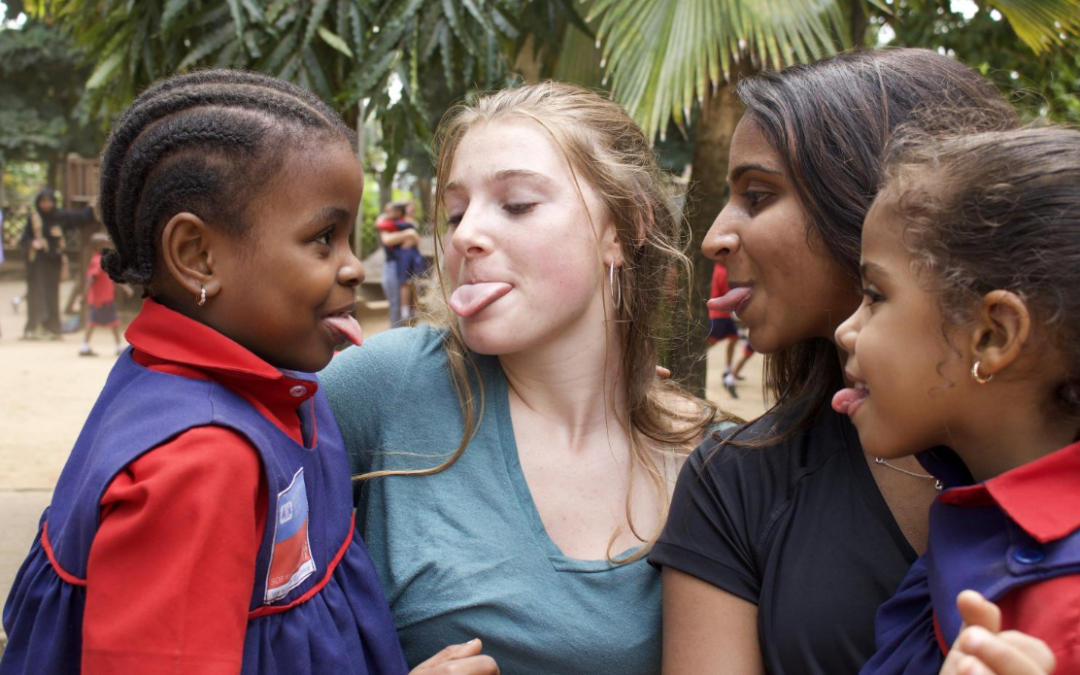
Global Leadership is a full-year elective offered at the high school beginning in 10th grade. Students in the class have the opportunity to go on many trips including to Berlin for the Women’s Health Summit, Copenhagen for the Women Deliver Conference, Montreal for the World Health Summit, London for the Global Health Film Festival and many others. This past summer, a group of students went on a cultural exchange trip to Zanzibar, Tanzania.
Teachers Ben Kahrl, Joanne Burke-Hunter, Stephanie Hunt and Rochelle Joan Mains accompanied juniors Rebecca Downes, Bella Ghafour, Henry Bulkeley, Brian Bechler, Ben Caplan and Hector Cabrera, and seniors Maansi Patel and Hugh McKenzie.
A lot of work goes into planning a trip like this, and according to history teacher and leader of the trip Ben Kahrl, many plans changed due to unforeseen circumstances arising.
“We were going to go to Nicaragua and they had Zika, so we couldn’t go. I had an application to Ethiopia, and riots broke out against the government, so we pulled that application,” he said. “So, trying to find a place that is interesting, different and safe does have some challenges.”
Kahrl said he selected Zanzibar, Tanzania as the destination for the trip because it is a safe and interesting country to visit, and having been there before, he had contacts there.
According to senior Hugh McKenzie, the purpose of the trip was cultural exchange and learning about global health, and also understanding what living in a predominantly Muslim society is like.
“We played soccer with some of the women’s soccer teams because in a Muslim country, it is difficult to have that right. We visited NGO [Non-governmental organization] projects in Tanzania and met with rural locals who are a lot poorer than the people in the main town,” McKenzie said.
Junior Bella Ghafour said that while in Tanzania, they went to a lot of schools and interacted with the students who went there, shadowing classes and participating in different activities with them.
“We went to a bunch of different schools,” she said. “Some were pretty, higher class, and you could see better schools, better desks, better everything, and then there were some that you could see were a lot less fortunate in their resources.”
Kahrl talked about their visit to one of the schools specifically, which was a Muslim school.
“It’s really equivalent to our Catholic schools,” Kahrl said. “I think that when people think Islamic, they think ‘oh my god, madrasa,’ and that means brainwashing, though we would not say the same thing if a kid were sent to a Catholic school here.”
McKenzie spoke about their experiences going to the SOS School and interacting with the students there.
“The SOS School is a school for orphans. It’s probably the best school in Zanzibar and it’s very selective. What we did was we met with the high school students, and we really bonded with them. We understood their lifestyle a little better, and they understood our lifestyle. There was a lot of cultural exchange. Definitely exchange, not just understanding their culture but understanding each other’s.”
For McKenzie, meeting with the SOS high schoolers was the most meaningful part of the trip.
“They live a different lifestyle than us, and they definitely have a different perspective of the world, and things like marriage and sex, which are a lot different in that country,” he said. “The way they see things is very construed towards a Muslim view in an urban setting, and seeing them was so meaningful because it made me reflect on our society and how we see things.”
For Ghafour, the most meaningful part of the trip was visiting the Big Tree school.
“It was one room,” she said. “I guess you couldn’t even call it a room, just a really beat up house that was for 25 kindergarteners and one teacher for the whole school and you could tell that they didn’t have many resources. When we came, we were playing with them, doing the parachute, and the teacher was just so, so happy, and you could see how just small things made them incredibly happy, and it just makes you think about your own life.”
For Kahrl, one of the most powerful moments was when they visited a different Muslim school that he described as being more like religious after school program.
“We heard about the five pillars and then a young man, maybe 12, 14 years old stood up and sang the call to prayer, which I find tremendously powerful even though I’m not Muslim and I don’t understand a word of it,” he said. “I think it is incredibly beautiful, and he sang it through with this incredibly gorgeous voice…At the end, all of the students sang a song, and again I didn’t understand any of it, but it had parts weaving through and it was one of the most beautiful songs I’ve ever heard in my life, and to have Americans see the part of Islam that we don’t see in the news, but is people visiting with people, and both groups really loving it.”
Kahrl hopes to keep this as an ongoing exchange, currently planning trips in February and July.
Ben Mandl, Opinions Multimedia Managing Editor
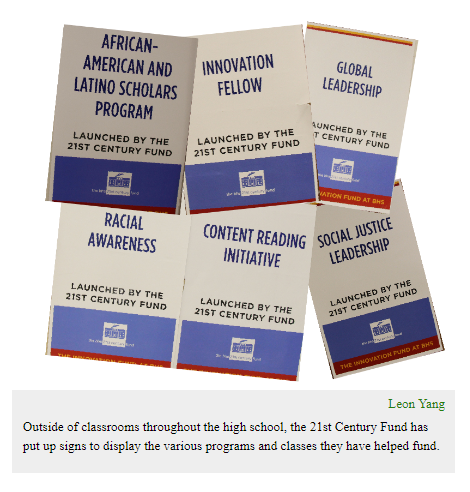
Leon Yang
Outside of classrooms throughout the high school, the 21st Century Fund has put up signs to display the various programs and classes they have helped fund.
Rachel Vin, Staff Writer
November 10, 2016
While many kids sit in class answering questions from traditional textbooks, visual arts teacher Thato Mwosa watches her students’ eyes light up as they work. Each one learns new skills and expresses themselves creatively as they make their own mini-documentaries for the newly introduced History as Film course.
This new course, as well as many other courses in the high school, was created by a teacher, and was put in motion with funding from the 21st Century Fund, which supports teachers in developing new programs for the high school. According to the fund’s mission statement, its purpose is “to empower the BHS faculty and community by fostering a culture of innovation and supporting the development of new ideas.”
By supporting new and creative courses, the fund provides both students and faculty with opportunities to advance their experiences beyond traditional methods and curricula.
Elizabeth Zachos, chair of the 21st Century Fund, said that one of the Fund’s main purposes is to supplement the high school in a way that is generally not offered.
“It’s about bringing learning opportunities to BHS students that are not typically available in a public school setting,” Zachos said. “Also, it’s about providing teachers with an opportunity to develop professionally outside the normal structure of teaching.”
Junior Liam Downey was involved in two 21st Century Fund courses last year: Global Leadership and Racial Awareness. Downey said that the structure of these classes was more unique than traditional academic courses.
“It’s definitely diversified the way I’m learning because you tend to learn along five courses, but these don’t really fit into any of those lines,” Downey said. “There weren’t a lot of notes or tests. It was more of a discussion based classroom.”
According to Spanish teacher Astrid Allen, who is also the Fund’s program liaison, teachers with ideas for new courses will often approach her. Her job is to help them build a proposal for this potential course or program, and this will later be presented to the Fund’s program committee.
“Part of my job is reaching out to the whole school community to find out if anyone has any innovative ideas that they want to move forward in some specific way and to bring that proposal to the program committee of the 21st Century Fund,” Allen said.
According to Zachos, if funding is approved for a new course, it typically goes through a trial period of two to three years. Some ideas are designed to be temporary programs, but for ongoing classes, the trial period tests the success of the course, which afterwards may be absorbed into the school budget as a permanent elective.
Mwosa co-teaches History as Film with social studies teacher and creator of the course Mark Wheeler. According to Mwosa, the creative aspect of the class makes students more engaged than they are in traditional history classes.
“This is sort of more active. I feel like the students are engaged and participating,” Mwosa said. “A big part of this class is being creative. You get to learn, but you get to be creative as well.”
Last year, the 21st Century Fund started a new program for teachers to produce fresh ideas called the Innovation Fellowship. According to Allen, The Innovation Fellowship chooses one teacher annually and alleviates their class load by one or two classes, giving them time to develop a potentially groundbreaking idea.
“They [21st Century Fund] wanted to give a teacher an opportunity to really follow a really innovative idea that would benefit the whole school and community,” Allen said.
According to Downey, the individual style of the classes allow students to learn what they’re passionate about without being restricted by curriculum requirements.
“It was taught where the teachers understood that we aren’t bound by a curriculum, but instead we were free to explore our own issues that we want to explore,” Downey said.
Allen said that the programs supported by The 21st Century Fund can expand a teacher’s career as well as the students’.
“The fund provides this opportunity for teachers to do something totally different, to use their expertise to create something that benefits students at the school where they see a need,” Allen said.
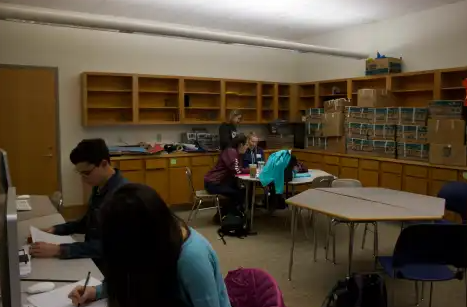
Teachers help students with their math homework in Math Center on March 16. Math Center is held prior to school every morning in multiple rooms, one of them being room 144.
It’s 6:30 a.m. and your alarm is ringing. A half an hour later, you’re out the door and on your way to one of the many help centers the high school has to offer.
For sophomore Claudia Marza, waking up early can be the deciding factor of whether or not to go to Math Center.
“I would much rather go in the afternoon for 15 minutes or half an hour than go in the morning,” Marza said. “Teenagers already get too little sleep as it is, so I think that having it in the afternoon would be better.”
Sophomore Jackie Mundis said that she doesn’t get the help that she needs when she goes to Math Center due to the distraction of other students.
“I like the idea of getting extra help,” Mundis said. “I’ve been a couple of times but, when I went, I found that I didn’t really end up getting the help that I needed. I think that it was a good idea to meet with my teacher, but I don’t think that I got enough help because I was pretty easily distracted by some of the other students who were there.”
According to Mundis, one of the biggest problems with Math Center, in addition to distracted students, is that there simply are not enough teachers to help all of the students who come.
“I think the main problem is that there is only one teacher in the room,” Mundis said. “Since there are a lot of students, you can’t really get one-on-one help.”
Marza also said that the lack of teachers present is a problem.
“I think that there should be more teachers there,” Marza said. “It’s like six kids to one teacher, which can make it really hard to get help.”
Math teacher and Math Center Supervisor Lisa Rodriguez said that she understands why students would not want to come to Math Center due to its timing, but feels that the program is run well.
“People don’t like how early it is, and certain kids don’t want to get up so early, even if they need help,” Rodriguez said. “I don’t think there are problems with how Math Center is organized, but I do think that, even if kids don’t want to wake up, they should try to come to Math Center for help if they need it.”
Rodriguez said it can be hard to have so many students and not very many teachers.
“In the upperclassman Center, there are a lot of kids who come in, but only three teachers,” Rodriguez said. “Some kids don’t like to work together and talk to each other, which makes it so that I often have to answer the same question like 10 different times, which makes it hard for me to get to all the kids. I can totally see that being a reason why some people don’t want to go to Math Center.”
Rodriguez said that she wants to get the word out to more students about Math Center so that more kids, especially those in standard level classes, can come and get help.
“It needs to be advertised more so that more students can take advantage of it,” Rodriguez said. “Not a lot of standard kids end up coming to Math Center. Usually, the room gets really packed with honors and advanced students, but I wish we could get more standard students to come.”
Senior and founder of the Science Center Aria Wong also said that not enough students know about the help centers.
“I think the reason that some kids don’t come is because they don’t know about it,” Wong said. “We haven’t done enough outreach and marketing.”
Wong said that she wants to spread the word about science center by making announcements, talking to teachers and putting up posters around the school.
Students work at the Writing Center prior to the school day. Senior Ben Groustra, who works at the Writing Center, said that there aren’t a sufficient amount of students who know about the program.
Petra Huang for the Sagamore
Students work at the Writing Center prior to the school day. Senior Ben Groustra, who works at the Writing Center, said that there aren’t a sufficient amount of students who know about the program.
Senior and Writing Center worker Ben Groustra was recommended for his place in the Writing Center by his history teacher and the teacher supervisor to the Writing Center Michael Normant. Groustra said that there are not enough students who know about the Writing Center.
“It can get very quiet in the Writing Center, and I feel like it is very under-utilized,” Groustra said. “A lot of teachers don’t have time to look over papers as much as they would like to or as much as some students need, and writing center is a great place for people who need someone to edit their paper when their teacher can’t.”
However, Andrew Kimball, who runs the Language Center, which meets Mondays and Tuesdays before school, during X-block and Thursdays and Fridays after school in room 206, where kids go to retake quizzes, get practice and ask for clarification, said that X-block is the most popular time for students to visit the Language Center.
“Attendance is equal before and after school,” Kimball said. “X-Block is easily the most popular time. We try to balance the hours before school and after school because lots of students have commitments after school.”
Groustra said that he understands it can be early to wake up, but feels that the mornings are the best time to get help and that it is well worth it.
“I don’t think there’s really a better time to do it,” Groustra said. “You need a time where everyone would have a free block, which wouldn’t really work, and people have stuff to do after school. Coming in before school for 10 minutes isn’t too bad, and that’s when everyone has free time.”
Petra Huang for the Sagamore
Infographic by Ben Mandl
The high school’s help center vary in time, room number and aid provided. This infographic relays this information.
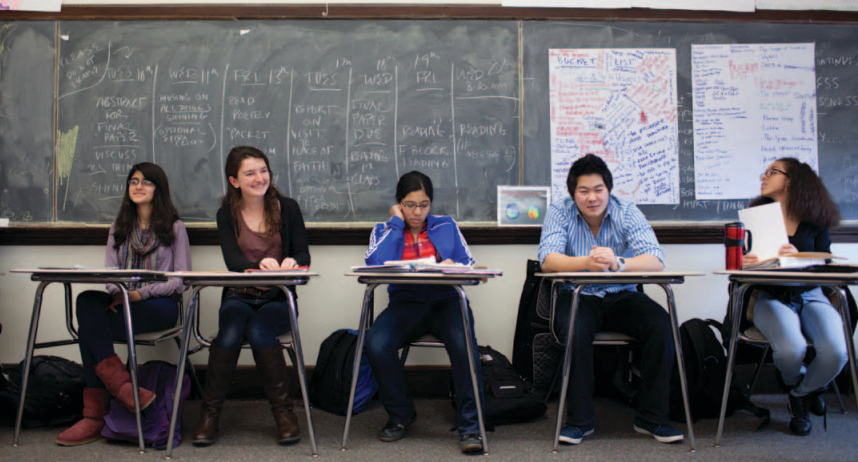
In a sea of high school leadership programs in Massachusetts, Brookline takes a step forward by leading an educational movement towards global leadership with a unique new course appropriately named Global Leadership.
Social studies teachers Daniel Green and Kathleen Boynton are currently creating the course, which is a class as well as a program, and they will co-teach it to about 30 students once a week.
Green and Boynton hope to give students the opportunity to gain the skills needed to be successful leaders, whether they want to go into business, work for the government or work for an inter-government organization such as the United Nations.
Although still in the making, the curriculum includes online discussion boards and chats, outside lectures and conferences, grant writing and designing and a core service learning project. At the end of the program, students will graduate with a specialized certificate in Global Leadership, after completing numerous of tasks relating to the course. The class is funded by the 21st Century Fund.
“There are a lot of Global competency programs and leadership programs in high schools and colleges,” said Green. “But I think what differentiates this is that there’s this core global leadership course in addition to students completing leadership tasks and being able to travel and being able to learn different new technological innovations, and so we’re really excited about this opportunity to try something that really hasn’t been done.”
Needham High School, Burlington High School and Swamscott High School all have leadership programs as well, but what makes Brookline High’s leadership program unique is a weekly seminar course and a selective application process.
According to Boynton other programs rely on students completing tasks and submitting paperwork. The BHS program focuses on integrating leadership skills with a global awareness.
Brookline’s program, made specifically by teachers, is individualized in a way that will give students the tools to become leaders. The different focus of the program caused freshman Eliza Fox to view the course on a different level than others at the school.
“Earlier I was thinking of applying to a private school but one of the main reasons that I chose to stay here for next year is because of the Global Leadership program,” said Fox. “I felt like it would just be really horrible to turn that down.”
Green and Boynton were both inspired after traveling to Cambodia with the Cambodia Partnership where they met “amazing leaders.” They came back asking what kind of skills a person needs to be such a leader and aimed to find the answer by creating the program.
When discussing the method for accepting students, Boynton said that they were looking for a diverse group of students with a passion for global issues yet weren’t looking for the students with the most experience.
“It wasn’t about having traveled to other countries before,” said Green. “What jumped off the page for me is there were examples of students who said, ‘I have a burning interest’ kind of like I did as a kid.”
Junior Nathan Evans, a student accepted into the class, said that he believes the course will give students a wider view of the world and that it is an important course for him to take regardless of the credit he would receive.
“Rather than getting homework assignments where you have to read in a textbook and write or look stuff up online, you get to do real world projects,” said Evans. “I know that’s part of the course so that gives you better experience than any homework assignment or class seminar will get you.”
Like Evans, Fox was excited by an interactive class to prepare the students for the global community. She said that she feels the class will be a challenge but is ready to take it on.
“I know that leadership is something that is a really good quality for someone to have in their life, whether it’s for a little sibling or even a whole country. I feel like it’s a really important quality to have and I know its something I have to work on personally,” said Fox.
Green and Boynton want to create and assign projects in the class to empower students to become leaders, and Boynton said that it’s extremely important to help students become globally aware.
“Why not prepare students not only to be competent,” said Boynton, “but to be global leaders?”