Thinking outside the box for new classes
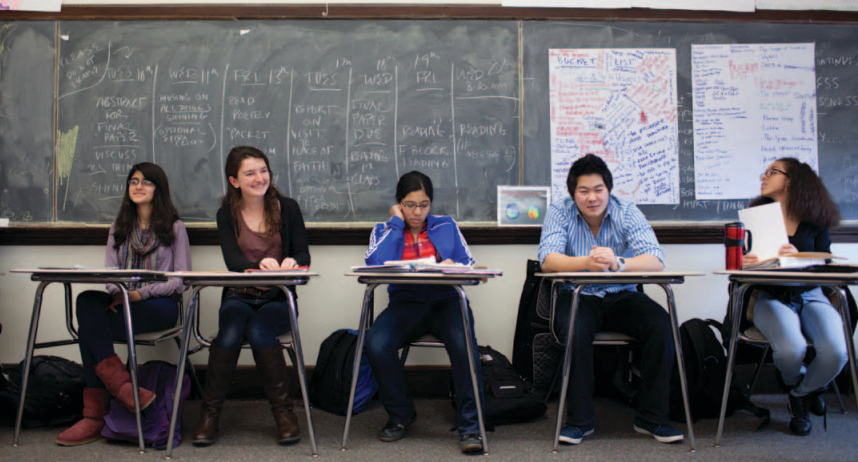
Bored with your math, science or Spanish class? There are three new classes that may be offered next year: A Human Math Experience, Drawing for the Understanding of the Field of Science and Medical Interpretation and Translation.
Every year, the 21st Century Fund introduces new programs and classes that are uncommon in high schools. This year, the program is hoping to fund these three new classes, two of which are not offered anywhere else in the country.
Faculty Leader of the Fund Gaelen Harrington has only good things to say about the new programs. She hopes that all of the planned classes will be initiated next year. If not, she intends to continue to push for these classes in the coming years.
“Part of our mission is that we see ourselves as an incubator of innovation,” said Harrington. “A proposal comes to us and we help it in its pilot phase of two, three, four years. If it is successful, we bring it to the school committee and ask the town to absorb it into its budget.”
A Human Math Experience will be about the application of mathematics outside of the classroom. According to Harrington, the unleveled class is not an average math class.
“The Human Math Experience arose out of math teachers’ concerns that so much of the teaching of math is to the test,” said Harrington. “Kids are taking math because it is required, or you want to take the AP exam, or you will take the MCAS or the SATs. There is not room in the school day to open kids up to real world application of math and the pure beauty of math. They wanted to offer a course that would provide that for kids,” Harrington said.
Mathematics Curriculum Coordinator Joshua Paris believes this class is different from other math classes for four main reasons: it gives insight into collegiate and professional math, it is not test-oriented, it is not constricted to the classroom and it is completely unleveled.
“I think that a lot of our classes use real world examples or questions, but more often than not, they are artificial,” said Paris. “This is the only place that will really look at what math is outside of the high school.”
Paris added that there will be projects and independent studies. He says that the students will not always be in their regular classroom because they will be using computers and visiting colleges. According to Paris, success in the course will commensurate with the level of dedication.
“It’s going to be about the effort you put into it,” said Paris. “As educators, that’s what we want. We want students who put in a lot of effort and invest their time to be successful.”
Unlike the math class, which is not taught in any other high school or college, the idea for Drawing for the Understanding of the Field of Science originated from a Harvard class which Donna Sartanowicz, an art teacher, and Jill Sifantus, a science teacher, took over the summer.
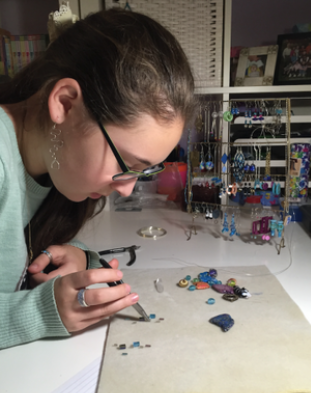
“One thing I love about it is that it breaks down the artificial wall between the arts and sciences,” said Harrington. “It’s really looking at drawing as a way of integrating and communicating knowledge. If you are doing field science and you are observing flowers or insects, you really get to know those thing if you are actually, pen in hand, drawing those things.”
Sartanowicz will be using her drawing skills and Sifantus her science knowledge to create a combined science-art class never seen before at the school.
“Both of us have our major interest. Mine in art, hers in science,” said Sartanowicz. “But both of us have an interest in the natural world. We are looking to collaborate by bringing in our separate strengths into a single course.”
The class will only count as an elective for the first year, but if it proves to teach the enrolled student a substantial amount of science, it will count for a science credit in subsequent years.
The new Spanish class, Medical Interpretation and Translation, also combines two subjects together: foreign language and science. This class was created to help students who are excelling in Spanish pursue their interest in other ways. These students will learn how to translate different medical terms from Spanish to English, and visa versa.
“It’s geared toward particular heritage speakers for whom the regular language course might not fit their level and sphere of skill,” said Harrington. “It is also geared towards very proficient Spanish speakers who are speaking it as a second language, who are looking for something more.”
This class is more than just a Spanish class. It offers an opportunity to learn about biology and Spanish while helping in the community. The students will be interacting with the Boston medical community by interning in hospitals and shadowing doctors as their Spanish interpreters and translators.
A common theme between these new classes is expanding the experience beyond the classroom. The math class visits colleges, the science-art class travels to fields and other locations, and the Spanish class works in a hospital.
“In this 21st century, in the world that we live in, I don’t think a class needs to be confined to four walls anymore,” said Paris. “One of the goals of this course is to remove those four walls from the classroom and to make it a more worldly class experience.”