
Good Grief

Good Grief

The emotional wrangling behind an intellectual response to AI’s influence on humanities education… And where to go from there.

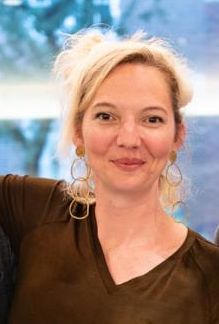
Evan Mousseau Feb 26 SubStack

An opening confession: A major component of what took so long to get this Substack writing component of my project underway was a sense of sadness that has lodged itself in my reading, writing, and teaching soul this year. (Another piece of things: the discovery of just how little time a course release can be, particularly this year. The prolonged drafting process of this piece has allowed it—or forced it?—to grow and morph as my ideas and feelings have developed and intersected with the thinking of others, I think in good ways. Still, that time element will take the spotlight in a future reflection.)

Quite simply, I am saddened by so many of the changes emerging in this world infused with Artificial Intelligence, particularly where these infusions collide with the world of education. I am sad when I feel the values that have been the bedrock of my classroom practice being dislodged and undermined by values of efficiency. I am sad when the arc of a well-planned unit that I have tinkered with for years is derailed by the specter of digital dishonesty. I am sad when I read a beautiful sentence and then wonder right after, Did the student who presented this piece to me actually write it?

I know from conversations with colleagues that I am not alone in this grief. Far from it. Many of us have shared these sentiments with our department chair, who reflected powerfully earlier this year on the ways in which our response to the challenges we face mirrors the nonlinear journey described in the classic stages of grief framework. He presented the ways those stages—denial, anger, bargaining, depression, acceptance—manifest in his practice, and we saw our own journeys through the past year or two reflected back.

There were those moments of denial when we tried to use the same assignments and processes we’ve relied on for years, in spite of knowing their vulnerabilities. And our anger when we find a series of suspicious student submissions. Anger we directed toward students for taking dishonest shortcuts that short-circuit their learning, or toward the system that incentivizes these shortcuts, or toward the technocrats who enable and even actively promote taking these shortcuts.

The bargaining what-ifs and compromises. What if I try to appeal to our relationship, to their desire to learn, to the authenticity of the task? What if I allow some AI support in this way here, but not here? (And when these don’t work quite the way we hope, the should-haves come. I should have pursued a different career path—look at everyone who seems to be blithely using these tools without worrying about their potentially deleterious effects on learning! And the what-if that lingers behind that thought: What if it’s not too late?)

Given the nature of my role during this school year, in which I opted in through an application to spend a course release researching, thinking about, developing, writing about, and sharing approaches for a humanities-wide response and adaptation to AI, it is a common and fair assumption that I’ve reached the point of acceptance—the technology is here, so let’s get on with it! Adapt and adopt! And I admit there are times when I feel this way. When an AI tool helps me develop a mock-up of a website I want to use to share my work with others, while rekindling a decades-dormant pleasure in playing around with (extremely basic) HTML. When an AI vocabulary quizzing prompt script led to rapid and sustained growth in a student’s word knowledge. Still, I find these moments are often few and far between.

At one point this year, I confessed to a colleague that I felt sad almost every time I thought about school. Knowing my relationship to work, I think this colleague knew that what I was really saying was, “I feel sad almost all the time.” This feeling of depression was a consistent gnawing that has made this work incredibly hard. But it maybe also speaks to why this work feels incredibly important. I wouldn’t feel this way if I didn’t care about these colleagues, these students, this school, this field, this work, this world so deeply.


Toward the end of the first semester, as this grieving was beginning to feel a bit self-indulgent, I was floored by a short essay by Brian Keith Jackson published by The New York Times. The essay title alone spoke directly to what I was experiencing: “We Are All in a Constant State of Grief.”

In my own self-centered state of constant grief, I could not help but read through the lens of my particular struggle, a lens that likely did an injustice to Jackson’s work. Indeed, I feel self-conscious even referencing his work here. Given its beauty, its anchoring in the natural world, its reflection on mortal loss and separation, it feels a gross misuse of his essay to even use it here, magnified all the more by the aggressive banner ad that looms above it as I review it now: “5 Questions to Protect Your AI Budget.” How can I compare my AI-induced professional grief that veers toward grievance to the grief that comes with a loss of life, the separations between parents and children? (Is comparison the thief of grief, as well as joy?)

And yet, with grace, Jackson invites the comparison, encourages the admission that I, too, am grieving:

We are all in a constant state of grief, even though we don’t always admit it. Grief comes with any change. Our friends, our lovers, our jobs, our health: Nothing is ever as it was the year, or the moment, before.

If I am feeling grief more acutely this year, it is because I am feeling change more acutely. I am grappling with a rapid changes to my job induced by a rapidly changing technology, anxious that the tools of the humanities that I have long turned to as anchors in the changing world are becoming themselves unmoored.


When I am closest to acceptance, I find myself thinking of a passage in William Faulkner’s Go Down, Moses, a novel I read in my senior years of both high school and college. I return to my heavily annotated copy with some frequency, and the passage that I gravitate to is one that I have on more than one occasion before stripped of its context and used as a window into my own life:

“It seemed to him that there was a fatality in it. It seemed to him that something, he didn’t know what, was beginning; Had already begun. It was like the last act on a set stage. It was the beginning of the end of something, he didn’t know what except that he would not grieve. He would be humble and proud that he had been found worthy to be a part of it or even just to see it too.”

Their words give me some solace, as art long has and often does, here at the beginning of the end of something. Even after months of reading about it, talking about it, living in it, I don’t have a firm grasp on what is beginning, has already begun. But I do know that the world of teaching and learning that formed me, both as a teacher and a learner, is changing, is perhaps even at the beginning of its end, at least in the ways that it has long existed, the ways that drew me to it as a way to spend my working days.

I wish sometimes that I had the grace to see this change through with the clarity and dignity displayed in that passage from Go Down, Moses. To be “humble and proud” and acknowledge the “fatality in it.” No public whining in 1600-word essays. Just crisp, direct statements of feeling and acceptance. But then I wonder—maybe wisely, maybe cynically—if this denial of grieving that Faulkner describes is its own part of the grieving process, whether that grief is for the ways of life and hunting in Yoknapatawpha County or the ways of humanities education in our modern world.


But then, as I read and write my way through this, I wonder:

When my own students encounter grief, hopefully in far-off futures, will they feel equipped to turn to writing as a means of exploring and expressing their feeling? Will they cast out a line of communication to another human? Will they observe the metaphors that abound in the natural world around them? Will they open a book, return to a poem, seek out a song that reminds them that they are not alone in their feeling and perhaps even offers some guidance on how to proceed?

Or will they turn to an algorithm?

And then I am grieving again.


So what is there to do, as humanities educators, or as humans in general, on this nonlinear journey through this particular piece of our constant state of grief? How do we navigate the feeling of loss that both comes in waves and permeates our working and waking world?

I find myself turning once again to a great work of American Literature to make sense of things.

In one sequence of the 1969 film A Boy Named Charlie Brown, Charlie Brown sits on a stoop with Linus, lamenting an eternally terrible little league season following their 99th straight loss without a win. Seeking to provide some solace to his friend, the ever philosophical Linus quips, “Look at it this way, Charlie Brown. We learn more from losing than we do from winning.”

In a world of constant loss, Linus calls us to participate in a world of constant learning. And isn’t that what the humanities is all about?

Good grief, indeed.
Justice in Action explores the criminal justice system with a hands-on approach

Justice in Action explores the criminal justice system with a hands-on approach

Daria Stoyanova, News Managing Editor • January 13, 2026

AMALYA SILBERT/CYPRESS STAFF

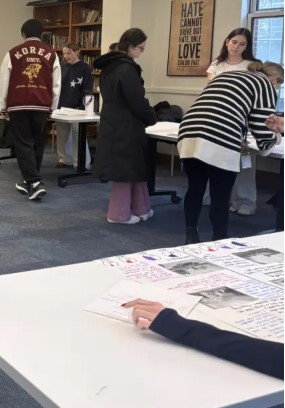
Students in the Justice in Action class do a gallery walk around the MLK room as they present their poster projects on Boston Neighborhoods.

Interning for a judge, visiting jail and learning directly from the Brookline Police are not generally experiences associated with a high school class. Yet, they are just a few of the opportunities gained by students in Justice in Action.

Justice in Action is an interdisciplinary social studies and English class that began this school year. The social studies portion examines the criminal justice system, and focuses on different case studies such as the OJ Simpson and Charles Stewart trials. The English class explores themes of justice through literature and film. The class has two blocks and is taught by social studies teacher Marcie Miller and English teacher Rob Primmer.

According to Primmer, the idea for a combined course came when he and Miller realized they shared many senior students.

“A couple years ago, Ms. Miller and I were just talking about shared students. We found that I had a lot of students in my senior fiction and film class who overlapped with her Legal Studies course,” Primmer said. “We started thinking it would be kind of cool if there was an English portion to the Legal Studies. What if we read books that were connected in some way?”

Miller and Primmer were curious in exploring what a combined class might look like, so last year they wrote a grant, which was later approved by the Brookline High School Innovation Fund. With two blocks to teach the course, Miller said they are able to explore topics in depth.

“[Before, we] didn’t have as much time to do the philosophy side of, ‘what is justice? What does it mean to actually get justice? Why do people turn to violence so quickly?’” Miller said. “All those big philosophical questions, we just didn’t have time to address in a one period class.”

The increase in time, according to Miller, is particularly helpful to a central aspect of the course: the third quarter internship. Students spend four hours per week observing justice work, from nonprofits to judges to the chief of police at Boston University. Senior Bea De La Rosa said she is looking forward to her opportunity to work with the New England Innocence Projects.

“I’m really excited to work with the New England Innocence Project for my internship because it will be interesting to learn about everything to do with the exoneree [one who is exonerated] network, and I’m really grateful for Ms. Miller [who] set it up,” De La Rosa said.

Senior Annabelle Sneider said the class has taught her a lot about the criminal justice system, and she enjoyed the experience of being able to hear other people’s stories firsthand.

“I really enjoyed going to the jail and hearing different people [speak]. I met a guy named Sean Ellis, who was exonerated and he was in jail for 22 years and he didn’t need to be. It was a really cool and really eye-opening experience,” Sneider said.

Miller said something the class strives to do is to help students form informed opinions.

“We have a very different police system in Brookline than in other neighborhoods. So this gives kids a chance to really take a deep dive,” Miller said. “We’re not teaching them what to think.
We’re just teaching them how to think.”

Primmer said he recommends the class to students ready to question systems and experience them hands-on.

“People who are interested in, perhaps the pursuit of law, people who are just interested in issues of justice. How do we evaluate what’s right, what’s wrong, what’s morally right and what’s ethically right?” Primmer said. “Then also thinking about, ‘What do I learn about Boston?’ Because there’s a lot of self examination about our own city that we’ve tried to pull into this as well.”

Miller said she has truly enjoyed the aspect of collaborating with Primmer in effort to create this innovative course.

“I love collaborating with Mr. Primer. I think it’s so refreshing, and when you’ve been here a long time, things can feel redundant,” Miller said. “[Justice in Action] is sort of teaching the same course that I’ve been teaching with a whole new set of eyes, curriculum, readings and speakers, all things that I wouldn’t have been able to do without that collaboration.”

Program Spotlight – Justice in Action

Program Spotlight – Justice in Action

This school year, the BHS Innovation Fund is supporting re-envisioning Legal Studies as Justice in Action, a new two-block senior elective that links English and Social Studies to examine how the law operates in both theory and lived experience.
In year one, the Fund’s $50,000 award is underwriting coverage so that English and Social Studies faculty can co-teach – providing daily shared planning time for the teaching team to make this ambitious interdisciplinary course possible. This dedicated capacity allows instructors to develop lessons, align curriculum across disciplines, coordinate community placements for students, and build partnerships with the stakeholders in the justice system – work that is essential but rarely feasible within a traditional school schedule.
Following the first year, the Fund will continue its support for the launch of Justice in Action through three consecutive years of summer planning support to refine the curriculum, strengthen community connections, and ensure the course’s long-term sustainability.
What’s your 2026 New Year’s resolution? GET INVOLVED WITH THE FUND!
Visit our website: https://bhsinnnovationfund.orgEmail us: bhsinnovationfund@psbma.org
Program Spotlight: Heritage Spanish-Speaker Pathway – Looking at Year Two

Program Spotlight: Heritage Spanish-Speaker Pathway – Looking at Year Two

The BHS Innovation Fund is proud to play a foundational role in launching this transformative initiative. In 2024, the Fund approved a three-year, $167,000 grant to design, pilot, and implement the Heritage Spanish-Speaker Pathway – now in its second year. These two innovative new courses ensure that heritage speakers that were not served well by traditional Spanish classes, now have a pathway that recognizes their linguistic assets, affirms their identities, and fosters deeper academic success. This investment allows two teachers to be in the classroom, a model that best supports the wide range of student needs and enables small-group instruction and differentiation. The BHS World Language Department has also committed to sustaining a portion of the program by absorbing a .2 FTE over three years. This significant commitment represents a step toward serving unmet needs of Latinx students, who comprise roughly 14% of the BHS population.
Dear Friends of the BHS Innovation Fund,
Now in its second year, the Heritage Spanish-Speaker Pathway continues to offer Brookline students who have a cultural connection to the Spanish language the opportunity to strengthen their language skills and explore the depth of their cultural heritage.
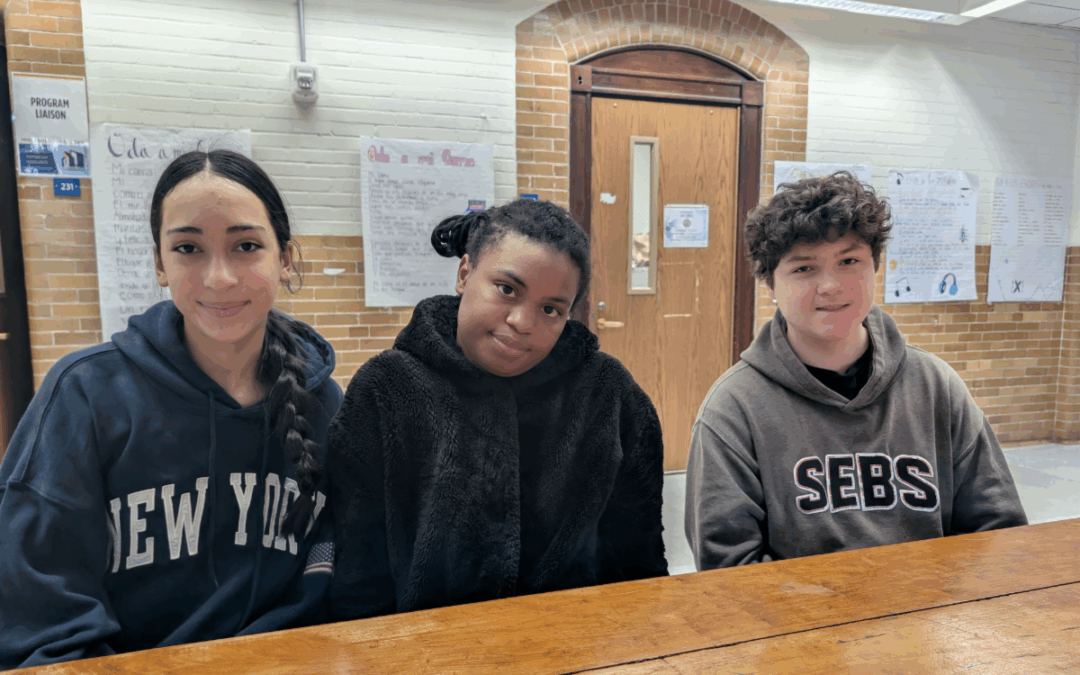
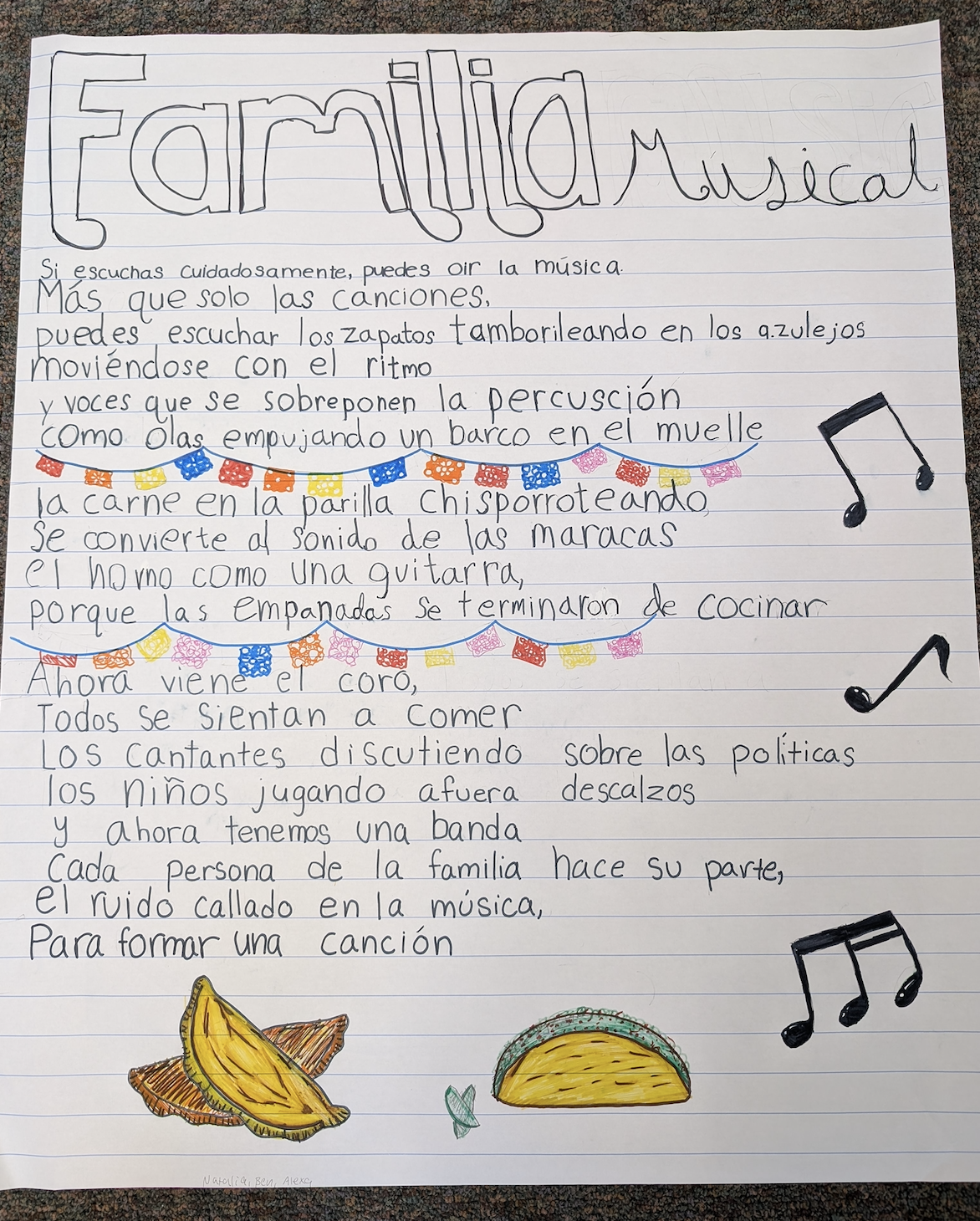
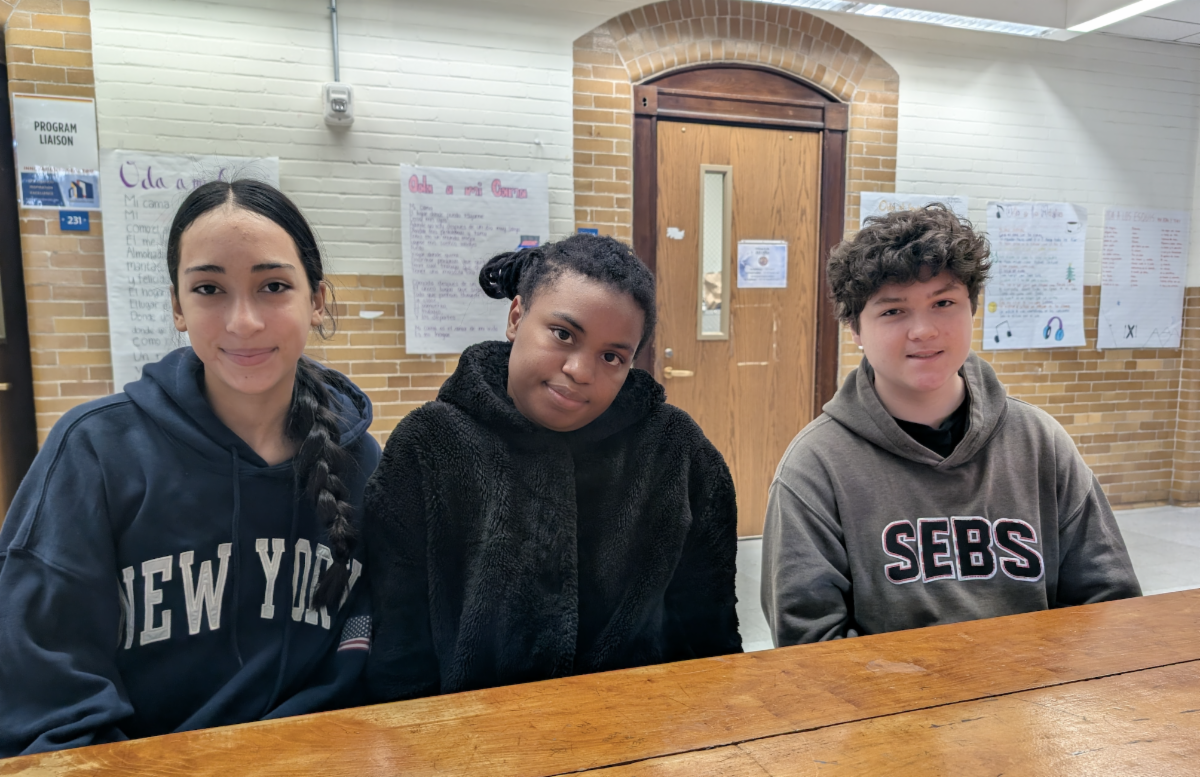
This year, the program has expanded to include a second-level course this year which is taught by Kevin Whitehead and Pedro Méndez. Building on the foundation of pride, literacy, and identity developed in the first year, Year Two deepens students’ skills in writing, reading, and cultural understanding while continuing to create a strong sense of community among heritage speakers.In the first unit of the year, students engaged in a poetry project inspired by Cool Salsa, a collection of poems by Hispanic authors. Through close reading and discussion, they analyzed how poets use figurative language and imagery to express identity and emotion. Then, in both individual and group poems, students created their own works centered on aspects of who they are. The project also emphasized accuracy in writing, including the use of accents and attention to detail in spelling and meaning. “The poetry project was interesting,” said sophomore Kayla Santos. “We got to play around with metaphors and similes. It was a great way to foster community because we know each other better, and it makes class go easier at times.”Students reflected on what it’s like to continue in the same cohort for a second year and how this class differs from their previous Spanish experiences. “It feels like we’re all moving on this journey together and improving at the same pace,” said Natalia Griffin. “It’s made for people who speak Spanish at home but need a different type of practice.” Classmate Santi Derrien explained that this program feels more connected to their real experiences. “We’re learning things that are really tailored to us,” he said. “It helps me understand more about the language I already speak.”
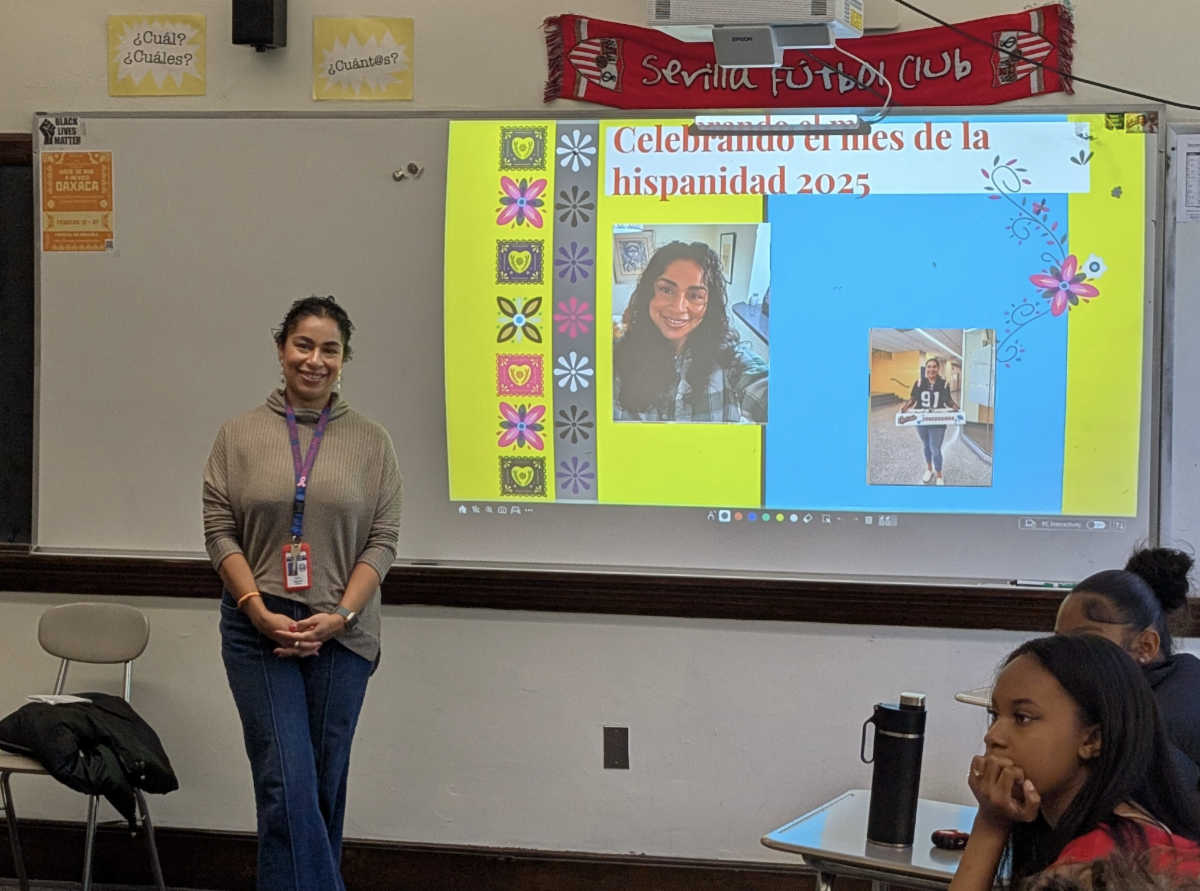
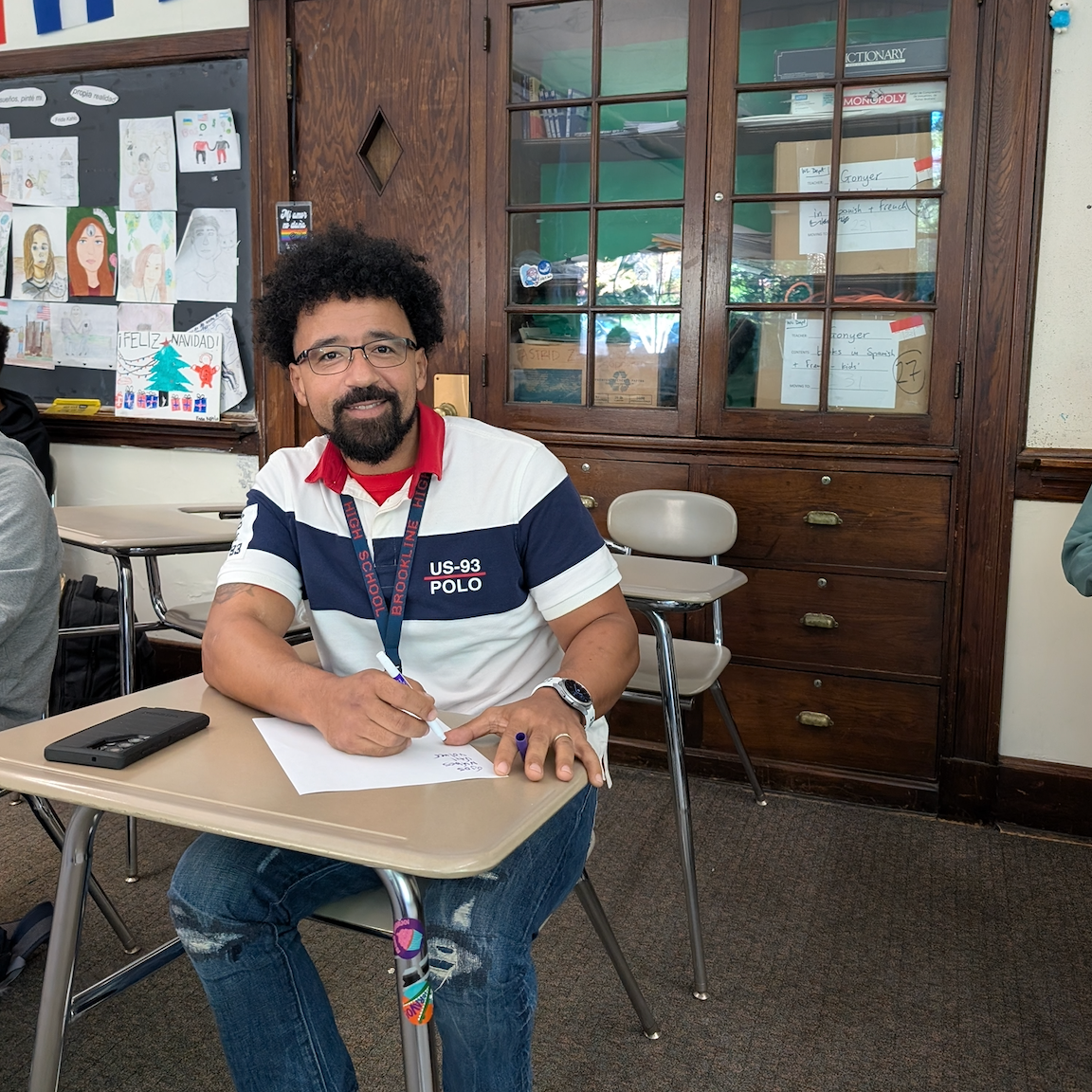
A highlight this fall was a visit from two BHS staff members, Sara Aggeler and John Ortiz, who shared their personal stories as heritage Spanish learners.Sara, who was adopted, spoke about growing up disconnected from her Colombian roots and her later determination to reclaim that part of her identity through finding her biological family and learning Spanish.
John talked about how his relationship with a loved one motivated him to return to school and embrace Spanish as a way to reconnect with his culture and change the direction of his life.
Learn More About Our ProgramsTheir stories made a strong impression on students. “Even though Ms. Aggeler grew up without her Colombian culture, she made it her mission to connect with it,” said Natalia. “It reminded me that I have a gift and shouldn’t ignore it. I should take advantage of the fact that I have my mom and my culture with me now.” Kayla reflected, “Mr. Ortiz was able to transform his life after meeting someone he loved. I was like that because I didn’t really like school much but I wanted to impress my mother and get better grades for her. I connected to his story because my mom works really hard to have a life and give me access to opportunities. I want to work for her.” Together, these reflections capture the heart of the Heritage Pathway: a space where language, culture, and identity come together to inspire pride, connection, and growth.
On behalf of our faculty and students, thank you to the BHS Innovation Fund for helping make this vision a reality and for continuing to invest in opportunities that bring learning to life at Brookline High.

EricaBHS Innovation Fund Program Liaison
Learn More About Our Programs
BHS Innovation Fund inspires new creativity in education

BHS Innovation Fund inspires new creativity in education

Alexander Muravyov, Staff Writer, The Cypress • November 18, 2025

The Galarama fundraiser celebrated Britt Steven’s culinary pathway. From left: Stevens, Rob Lawrence and Ben Stern pause to take a photo and capture the moment.

With over $7 million invested in over 30 programs at the high school, the BHS Innovation Fund impacts nearly all of us, even if we don’t know it. Through creative new courses to pilot programs, the Innovation Fund is behind many of the opportunities that define the high school.

The Innovation Fund originated 27 years ago and provides grants for teachers to develop innovative programs and curricula. From fundraisers to workshopping the programs themselves, the Innovation Fund is deeply committed to creating new and creative opportunities for students.

Anne Le Brun, who is on the Board of Directors, said the program makes a difference in teachers’ jobs.

“I think where we excel is in empowering teachers. I strongly believe that what we’re doing here is putting teachers’ ideas on the table and giving them the time and the ability to execute on their cool, creative ideas and making them the best teachers possible for our students,” Le Brun said.

Projects within the Innovation Fund begin when teachers pitch their ideas early in the school year. Le Brun said the board gives educators feedback on their proposals, and the teachers meet with them again later in the fall.

“They come back with full presentations; then we decide which ones we’re going to fund for the coming year,” Le Brun said.

Spanish teacher and faculty liaison for the Innovation Fund Erica O’Mahony said the reason teachers go through this lengthy process is because it can be difficult to receive funding from their department through grants.

“There’s lots of courses [teachers want to run] that maybe a department [will] say, ‘this is a little risky,’ or it’s innovative and so it’s often cross-departmental,” O’Mahony said.

While the Innovation Fund has been a reliable source of funding for teachers over the past few decades, consistent fundraising is necessary to keep the program running. Each year, multiple fundraisers are held, the largest of which was held on Nov. 6, 2025.

Le Brun says the goal of the event is to raise $125,000 through ticket sales, sponsorships and an auction.

“Every year in the fall we host a big [event]. It’s called Gallerama, and it’s a party. And every year we honor a different program that the fund has sponsored. So this year we’re honoring the culinary pathway and rethinking the restaurant programs,” Le Brun said.

To go along with this, the Innovation Fund holds a fundraising 5K in the spring and runs campaigns to solicit donations.

The programs funded by these donations go on to impact a wide variety of students. Spanish teacher Marta Fuertes said she has been a part of two programs, both of which she has found very beneficial to students. A few years ago, she helped develop a program to teach advanced Spanish speakers to be medical interpreters. Additionally, she took part in developing a program for students who speak Spanish in their homes, to help prepare them to test into higher-level Advanced Placement (AP) language classes.

“[The students in the heritage Spanish speaker class] have a much stronger sense of identity and pride of their identity as Hispanic Latino students,” Fuertes said.

Additional classes that the fund has helped implement include the reimagining of the 9th grade physics curriculum, Justice in Action, The History & Science of Sex and Gender and the culinary pathway (the courses that allow students to learn about the culinary arts, especially through working at the Tappan Green Restaurant). Le Brun highlighted the culinary pathway for the students it impacts.

“[The culinary pathway] speaks to a very different group of students who find a home in a particular part of BHS that is not AP Physics or AP whatever. It’s a very different avenue,” Le Brun said.

Le Brun emphasized that while the fund isn’t widely discussed, it has deep roots in the community.

“I think it kind of flies under the radar at BHS, but 10 percent of the [course] catalog started from Innovation Fund ideas or sponsored ideas,” Le Brun said. “And we really have touched the lives of every single student in some way, shape or form. So I think it’s a unique organization among public schools, and I think it’s part of what makes BHS so special.”

Program Spotlight – Rethinking the Restaurant: A Fresh Look at What’s Cooking at BHS

Program Spotlight – Rethinking the Restaurant: A Fresh Look at What’s Cooking at BHS

Program SpotlightFrom Classroom to Community: Reflections on Rethinking the Restaurant
Dear BHS Friends,
I recently walked into Tappan Green, our Brookline High School restaurant, and it got me thinking about how far this program has come and the amazing things our students have achieved.
Thanks to the generous support of the BHS Innovation Fund, we were able to rethink and redesign the restaurant experience from the ground up. What was once a traditional culinary classroom has become a thriving, student-led enterprise that connects learning with real-world purpose.
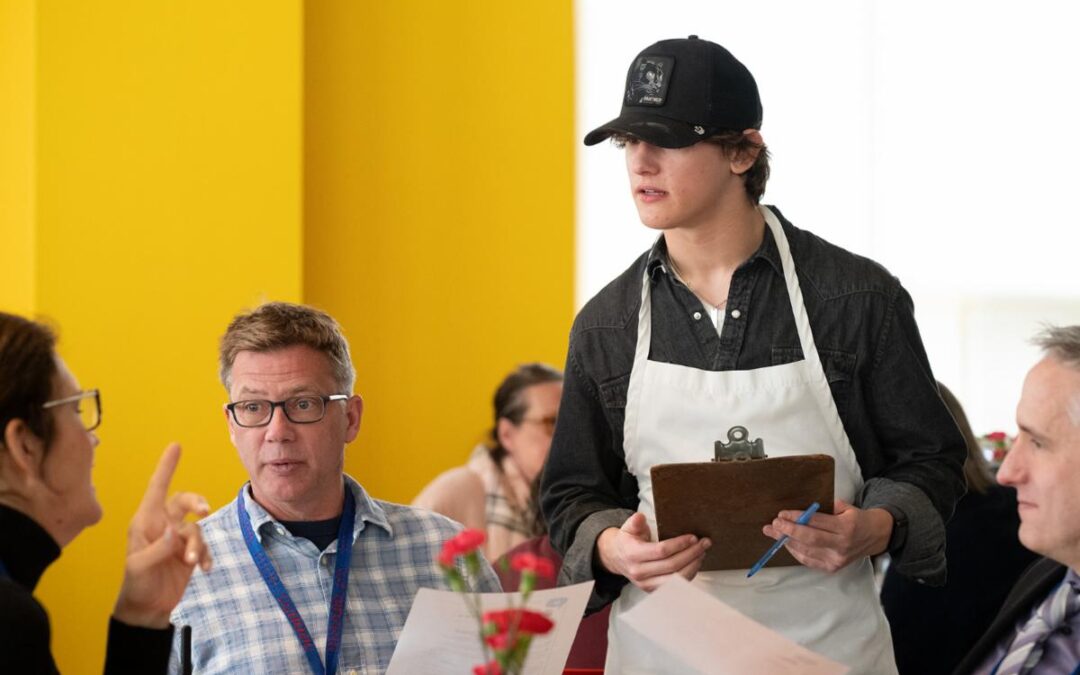
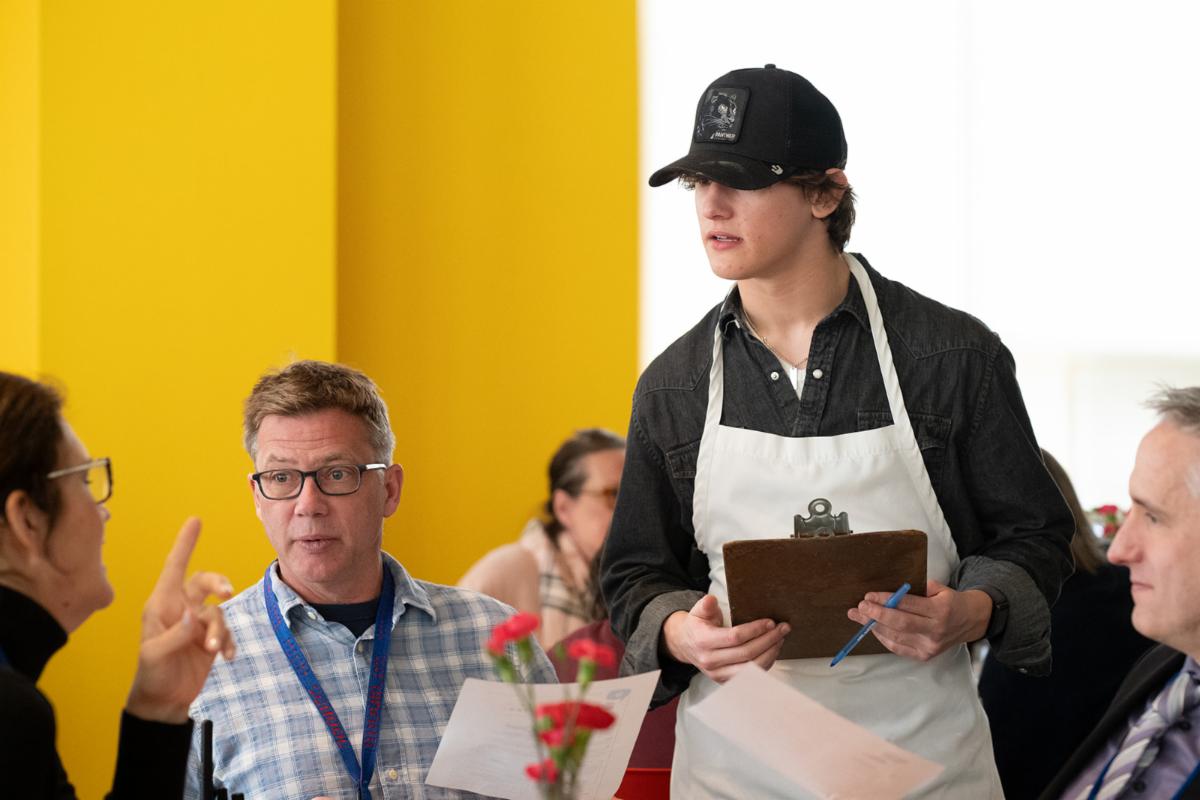
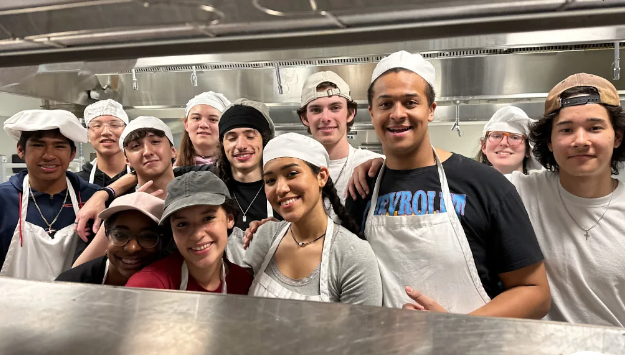
Students have taken charge of every part of the operation — from menu design and food preparation to business management and customer service. Along the way, they’ve built confidence, teamwork, and leadership skills that extend far beyond the kitchen.
GET TICKETSThis year, we’re spotlighting the Fund’s bold investment in the Rethinking the Restaurant and Culinary Pathway program with a special culinary evening catered by the BHS restaurant, Tappan Green.
Come savor, connect, and celebrate with us as we showcase how innovation is thriving at Brookline High — and how your generosity continues to make it possible.Support our biggest annual fundraiser and experience firsthand the creativity and collaboration shaping the future of BHS.
For us as faculty, the most rewarding part has been watching students light up with pride as they serve their peers and teachers – seeing their creativity, collaboration, come to life on every plate. The restaurant has become more than a place to eat; it’s a place where learning, culture, and community truly meet.
Listen to Milo Dantowitz, a BHS alum, share his reflections and experience with The Restaurant.
WATCH NOW
Rethinking the Restaurant has shown what’s possible when students are empowered to lead and innovate. None of this would have been possible without the Innovation Fund’s investment in the Culinary Pathway, which helped us transform a classroom into an experience that inspires every day. Over $120K was invested over a two-year period.
On behalf of our faculty and students, thank you for helping make this vision a reality — and for continuing to invest in opportunities that bring learning to life at Brookline High.

EricaInnovation Fund Liaison
P.S. I hope you’ll join me at GALA-RAMA on November 6th at 7:00PM
Learn more about the programs supported by the BHS Innovation Fund
Welcome to the BHS Innovation Fund

Welcome to the BHS Innovation Fund

We’re excited to introduce you to the BHS Innovation Fund—the driving force behind many of the school’s most popular and impactful courses and programs. The Fund empowers teachers to create new, engaging ways to inspire students while helping BHS attract and retain outstanding educators.
Who We AreThe BHS Innovation Fund empowers faculty and administrators to bring bold ideas to life through grants that support the development of new interdisciplinary and forward-thinking courses and programs. Our initiatives enrich the school’s academic culture, spark creativity in teaching, and prepare students to thrive in a rapidly changing world.
Get Involved with the BHS Innovation FundGet involved with the BHS Innovation Fund to make connections, support teachers, and help bring innovative programs to life! Volunteering with the BHS Innovation Fund is a great way to meet other parent-volunteers, support our teachers, and help launch innovative curriculum. Whether you can give a little time or a lot, your support matters.Connect With Us
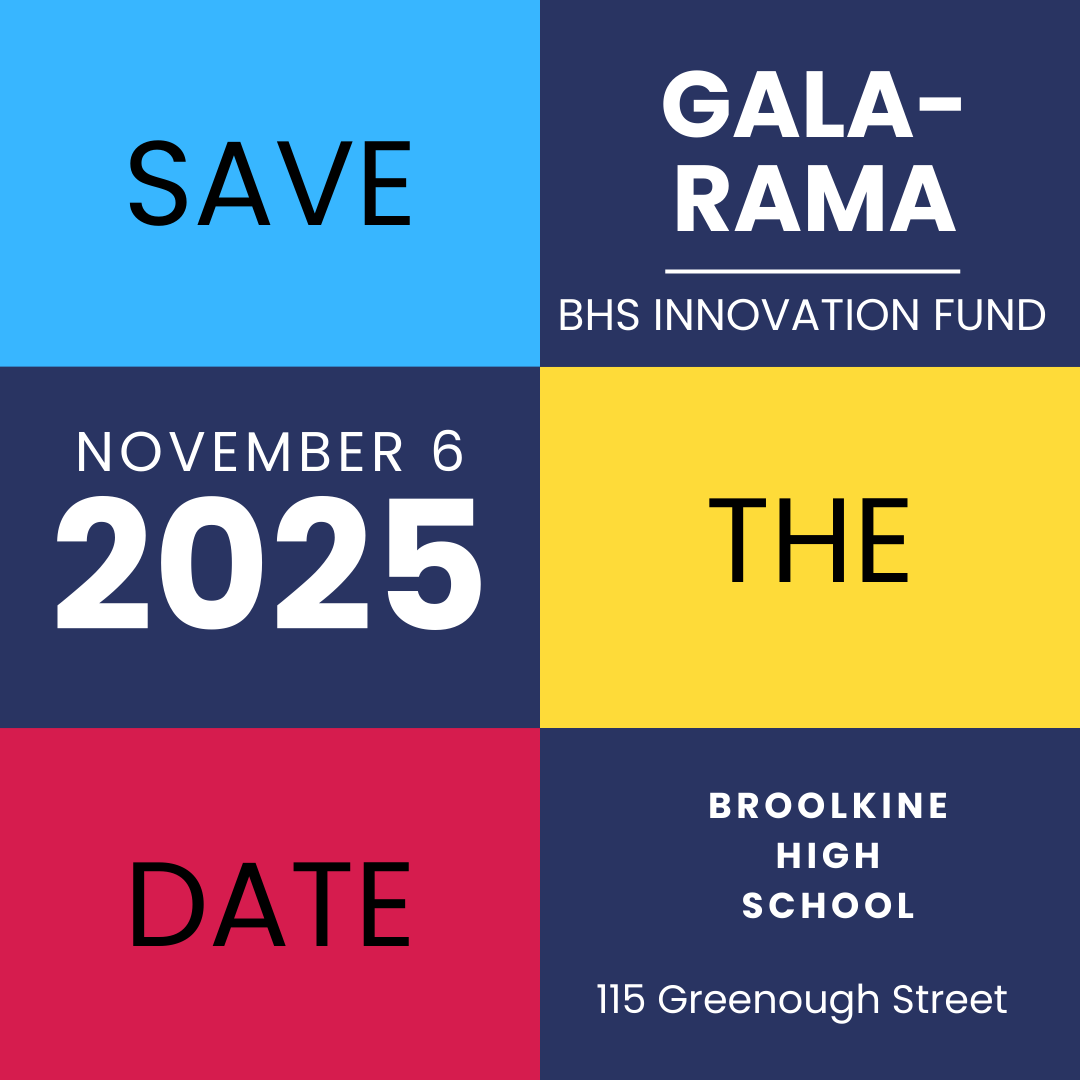
GALA-RAMA ’25Savor. Connect. Celebrate.Don’t miss BHS’s biggest fundraiser on Thursday, November 6th, 2025, at 7 PM. It’s a festive night to meet fellow parents/guardians, connect with the school community, and support teacher-driven innovation. Enjoy delicious culinary creations prepared by our own student caterers, great conversation, and an evening of celebration.
Get Your Tickets
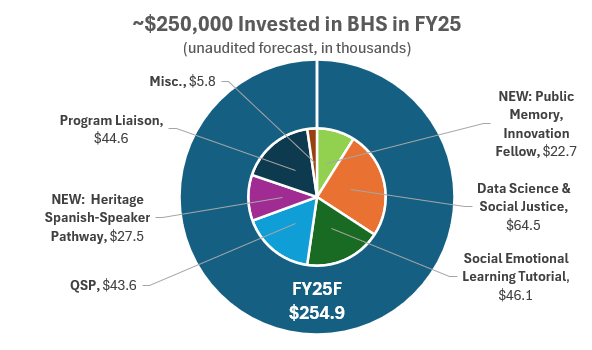
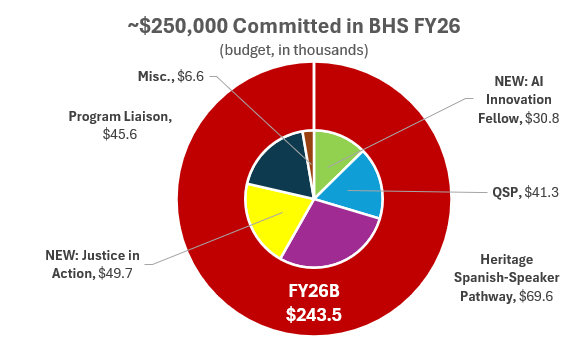
Over $250,000 Invested in BHS Last YearIn 2024–25, the BHS Innovation Fund invested over $250,000 to spark innovation at Brookline High School, funding six new academic initiatives, year-long course releases for ten faculty members, and over $20,000 in curriculum planning outside of school hours.
New Programs This Fall Centering the Humans of Humanities in the Age of AI This initiative will help educators and students navigate the opportunities and challenges of AI while centering on such as creativity, critical thinking, and intellectual independence.
Justice in Action An interdisciplinary, double-block Social Studies and English elective for 12th graders exploring legal studies through case studies, journalism, fiction, personal narratives, film, and experiential learning.
Heritage Spanish Speaker Pathway Level 2,My Culture, My Heritage This second-year course continues the rollout of the new language Pathway through units on power, identity, assimilation, and immigration through Spanish-language texts. It will be offered concurrently with Level 1, My Language, My Heritage.
Learn More
Calling All TeachersThe Grant Cycle BeginsThis summer, the Fund proudly funded the Future of BHS: Innovation Summit, a one-day summer gathering led by Erica O’Mahony. Cross-departmental teams of educators explored several promising new curricular initiatives for 2025–26 and beyond, making the Summit a resounding success. We look forward to your big and bold proposals!Submit your Pitch
Quick Pitch Proposal DeadlineOctober 8th, 2025

Get Connected. Attend Events. Follow us on Social.
          
At the Brookline High School Innovation Fund, our mission is to catalyze innovation at BHS by supporting faculty-driven curricular initiatives that will inspire our students and prepare them to thrive in a changing world.
BHS Innovation Fund • 617-713-5201 • 115 Greenough Street, Brookline, MA 02445www.bhsinnovationfund.org
YEAR IN REVIEW: Looking back, Looking forward, and celebrating innovation at BHS

YEAR IN REVIEW: Looking back, Looking forward, and celebrating innovation at BHS

What a year it’s been!
In 2024–25, the BHS Innovation Fund proudly supported six impactful academic initiatives at Brookline High School, investing over $250,000 in educational innovation. This funding included year-long course releases for 10 faculty members and more than $20,000 in curriculum planning outside the regular school day.
american-flag-building.jpgInnovation Fellow: Public Memory (Year 1 of 1)As the Fund’s 2024–2025 Innovation Fellow, BHS Social Studies teacher Mark Wheeler guided students to explore how Brookline’s public memory is constructed – through what is memorialized in signage and statues – and what has been left out. Students created words and images based on their own original research that contribute to the evolving historical narrative.

Student work: Collaborating with Librarians and fellow Social Studies teachers, Mark helped develop new curriculum. Illuminated Brookline involved students researching and designing plaques for Brookline sites tied to slavery and resistance (see below), while Brookline Like Me connected students’ research on Brookline’s immigrant past to the experiences of newly arrived migrants, including current BHS students. These projects engaged students in public history, archival research, and storytelling that fostered a stronger sense of community and belonging. Explore their work here: Illuminated Brookline: Stories of Slavery & Resistance in Brookline.
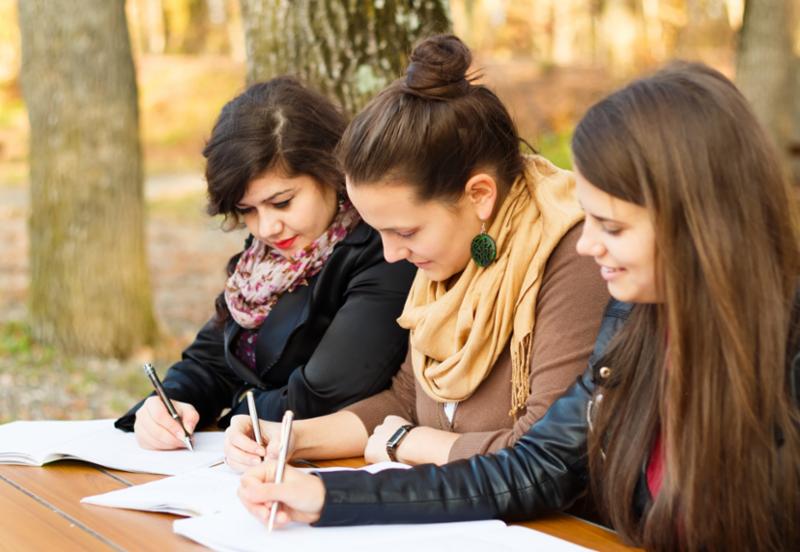
college_studying_outside.jpg


Heritage Spanish-Speaker Pathway (Year 1 of 3)This first year in a two-year sequence, led by Eric Colburn and Marta Fuertes, supported heritage Spanish students in developing literacy while embracing cultural and linguistic identity.
Course excerpt (Year 1: “My Languages, My Heritage”): A literature-based course for primarily 9th graders that explores identity and builds literacy in Spanish. Students engage in essay writing, critical reading, and discussion, leveraging bilingual skills to support academic growth.
Quote: “Many students who are connected to the language want to take a Spanish class because they want to be more connected to their culture and their heritage but what happens is -because they’ve learned it a different way, by speaking it at home or hearing it at home – their linguistic needs are completely different.”-BHS Faculty
gay-pride-car.jpg
Queer Student Program (QSP)  (Year 2 of 3)With approximately $44,000 in funding throughout the 2024-25 school year Kate Leslie and Julia Mangan led the expansion of this trailblazing program for LGBTQ+ students. The QSP is building a strong culture of belonging at BHS and impacting a significant number of students through the following programming:– Monthly OUTstanding Speaker Series – About 400 students attended one of the 9 separate talks9th and 10th Grade Queer Advisories – 15 students per section in these Advisory classesQueer Wellness – ~30 students signed up tfor the clasGSA – ~25 regular members who come weekly during X-BlockQueer Student of Color Lunch – There are ~20 regular members who come weekly during one of the lunch blocksQAC – ~10 regular members who come weekly on Thursdays after-schoolQueer Student Union Drop-In Space – ~50 students regularly utilize this space as a hang-out spaceBrookline Pride Parade – ~100 middle and high school students attended this event in MayLGBTQ Day of Dialogue Assemblies – The whole student body (~2,200) attends these assemblies
Quote: “These teacher volunteers are wonderful. They help me with homework. They’re incredibly supportive. And I find that this is honestly where I feel most of my support.”- BHS Student
young-women-laptop.jpg


Data Science for Social Justice  (Year 3 of 3)Funded at $64,000 in school year 24/25 for three teachers, this course empowered students to use data to analyze real-world inequities. Created by Danielle Rabina, Danielle Theissen, and Christopher Monschauer, it blends statistics, ethics, and social inquiry.
Course excerpt: Students build skills with tools like R, R-Studio, Tableau, and Google Platforms, applying concepts like regression and machine learning to case studies focused on social justice. Open to 11th and 12th graders who have completed Algebra 2.
CLICK HERE to learn more about the course.
Quote: “I think more teachers need to incorporate these types of projects into their lessons.”- BHS Student
donation_palm.jpg

Social Emotional Learning Tutorial (SEL-T)  (Year 3 of 3)With a $46,000 investment in school year 24/25, Laura Gurry and Jennifer Hanaghan integrated social-emotional learning into Tutorial blocks. Students practiced self-regulation, stress management, and self-advocacy – boosting academic performance and personal confidence.
Quote: “I absolutely love taking Tutorial – it was incredibly helpful to me… really great community and it’s a great time in your day to get teachers to help you organize yourself and get your work done – and just support overall.”- BHS Student
Faculty LiaisonWith a commitment in school year 24/25 funded at $45,000, Erica O’Mahony plays a critical role in program development, implementation, and evaluation – serving as a trusted connector between educators, administrators, and the Fund.
The Grant Cycle: Faculty are encouraged to submit a “quick pitch” in the fall. The Faculty Liaison helps develop ideas into full proposals for consideration by the Fund’s Program Committee. With input from departments, BHS leadership, PSB, and the School Committee – and based on available funding – awards are approved in the spring for pilots programs that are typically multi-year endeavors. Interested faculty, please reach out: erica_omahony@psbma.org
Pilot Program Roll-offs: THANK YOU, INNOVATIVE TEACHERS!Two pilot programs funded by the Innovation Fund have now been integrated into the permanent BHS curriculum and will continue – proof of the long-term impact of our investments:Data Science for Social Justice has been added to the course catalog. Congratulations to Josh Paris, Danielle Rabina, Danielle Theissen and Christopher Monschauer!Social Emotional Learning Tutorial (SEL-T) has been embedded into the core Tutorial structure. Congratulations to Scott Barkett, Laura Gurry, Jennifer Hanaghan and Heather Giblin!
Looking Ahead to School Year 2025-26
ANNOUNCING NEW AWARDS!
We are excited to fund two new one-year pilot programs and an expansion of the Heritage Spanish-Speaker Pathway.
INNOVATION FELLOW: Centering the Humans of Humanities in the Age of AIHelping educators and students navigate the opportunities and tensions of AI while centering creativity, critical thinking, and intellectual independenceAs AI tools become more widely used in educational spaces, humanities teachers face unique challenges and opportunities. English teacher Evan Mousseau will work as the 25/26 Innovation Fellow to explore three interconnected strands of this work: supporting teachers in leveraging AI tools to enhance their instructional practice, equipping students with the skills to use AI responsibly and ethically, and preserving the uniquely human aspects of the humanities. The project will create a sustainable framework for AI literacy by researching, developing, and providing resources and professional development for teachers, creating curriculum materials that promote clarity of purpose when using – and not using – AI, and fostering a culture at BHS in which technology supports, rather than replaces, human thinking and connection.
JUSTICE IN ACTIONAn interdisciplinary, two-block Social Studies and English course – led by Marcie Miller and Rob Primmer exploring legal studies through case studies, journalism, fiction, personal narratives, film, and experiential learning.This elective focuses specifically on the criminal justice system, providing students with opportunities to learn about its structure and processes, including the differences between civil and criminal law and the full procedure of the criminal justice system—from arrest to trial, sentencing, and post-trial outcomes.Students will conduct in-depth studies of two major cases—the O.J. Simpson case and the Charles Stuart case—to explore key issues in criminal procedure. Concurrently, students will read literature and view films that reflect these themes.In the third quarter, students will complete four observation hours per week, replacing three class days. During remaining class periods, they will participate in internships – such as the Citizens Police Academy, discussing contemporary issues in policing such as de-escalation, mental health, less-lethal weapons, drug enforcement, and domestic sex trafficking..Students will complete final projects in both English and Social Studies: a mock trial packet and either a screenplay or a research paper. The course is divided into two sections—one taught by an English teacher and one by a Social Studies teacher—that meet in separate blocks but periodically come together for joint instruction.
HERITAGE SPANISH-SPEAKER PATHWAY: Year 2 – “My Culture, My Heritage”Led by Kevin Whitehead and Pedro Mendez, this concurrent second-year course continues the work of “My Languages, My Heritage” through thematic units on culture, politics, and identity.Course excerpt: Students explore language and power, identity and assimilation, and immigration through Spanish-language texts. Emphasis is placed on how “proper” language is defined and its social implications.
SPECIAL AWARD: Innovation SummitThe Fund awarded the Future of BHS: Innovation Summit, a one-day summer gathering where educators workshop transformative ideas. Led by Erica O’Mahony, the Summit invites small cross-departmental teams – selected via open application – to develop bold proposals for 2025–26 and beyond.
READ ABOUT ALL OF OUR PROGRAMS
Leadership – Comings and Goings
“Serving on the Innovation Fund board has been a meaningful way I’ve been able to give back to my kids’ school. It’s a privilege to support the incredible educators at BHS who are creating forward-thinking educational opportunities that benefit all students. Being part of that work – helping turn great ideas into real opportunities for kids – is deeply rewarding and this team of parent volunteers is a pleasure to work with.”- Ben Stern, Co-Chair, BHS Innovation Fund

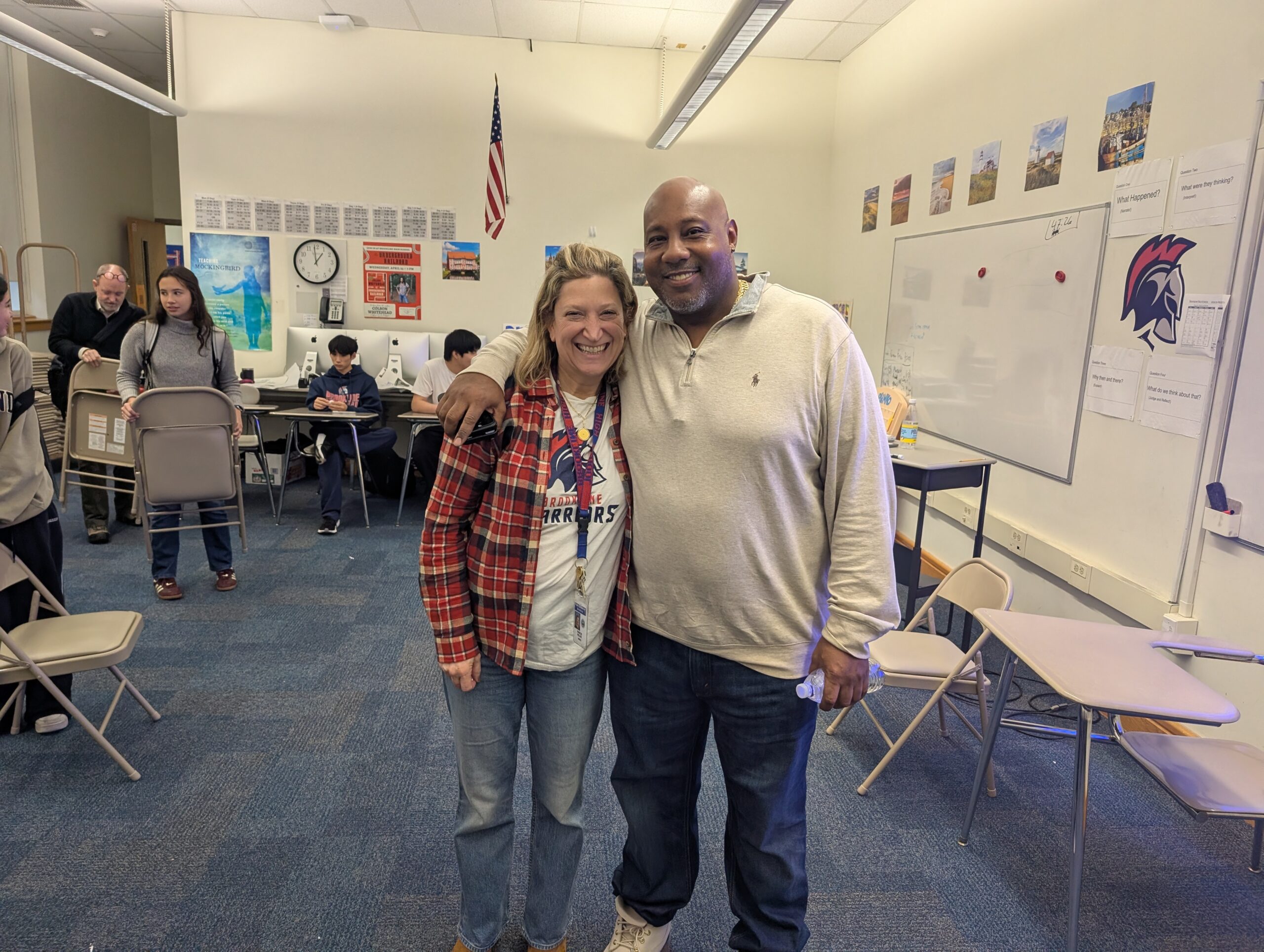
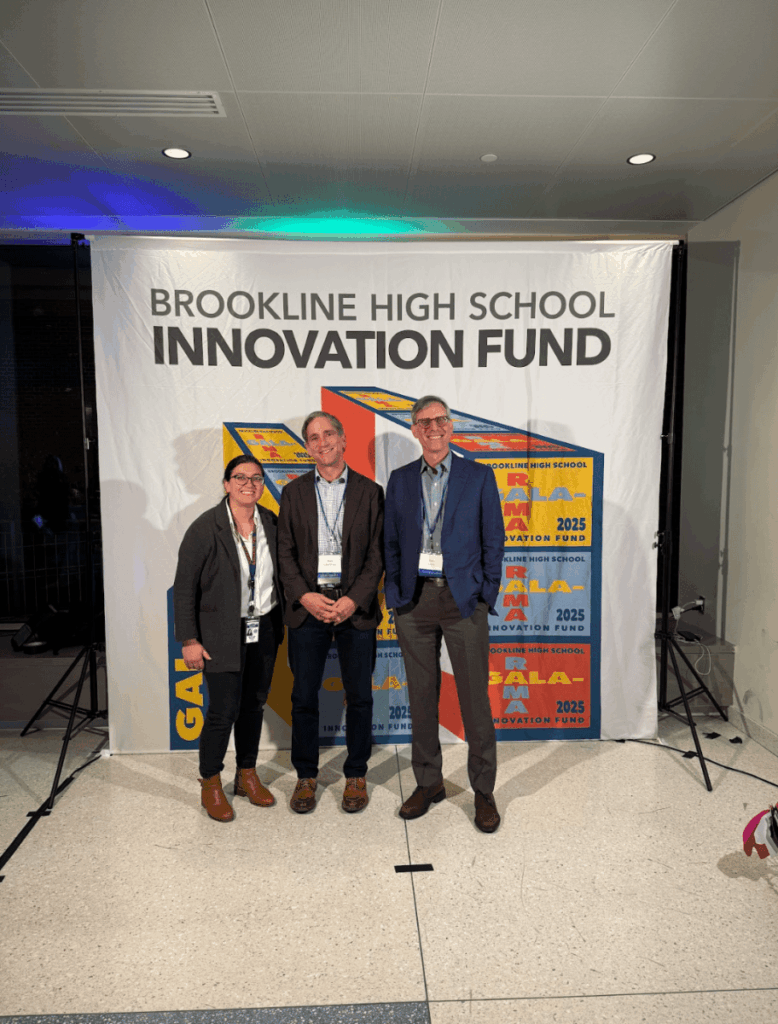
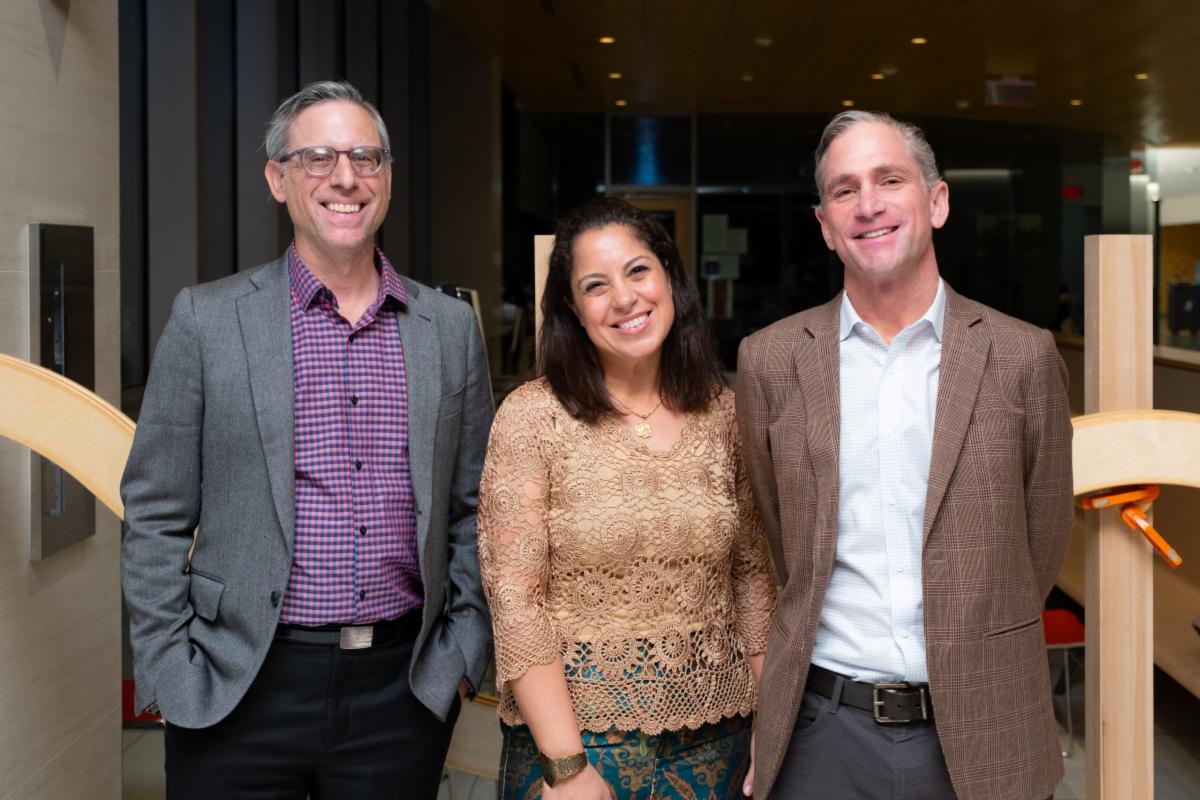
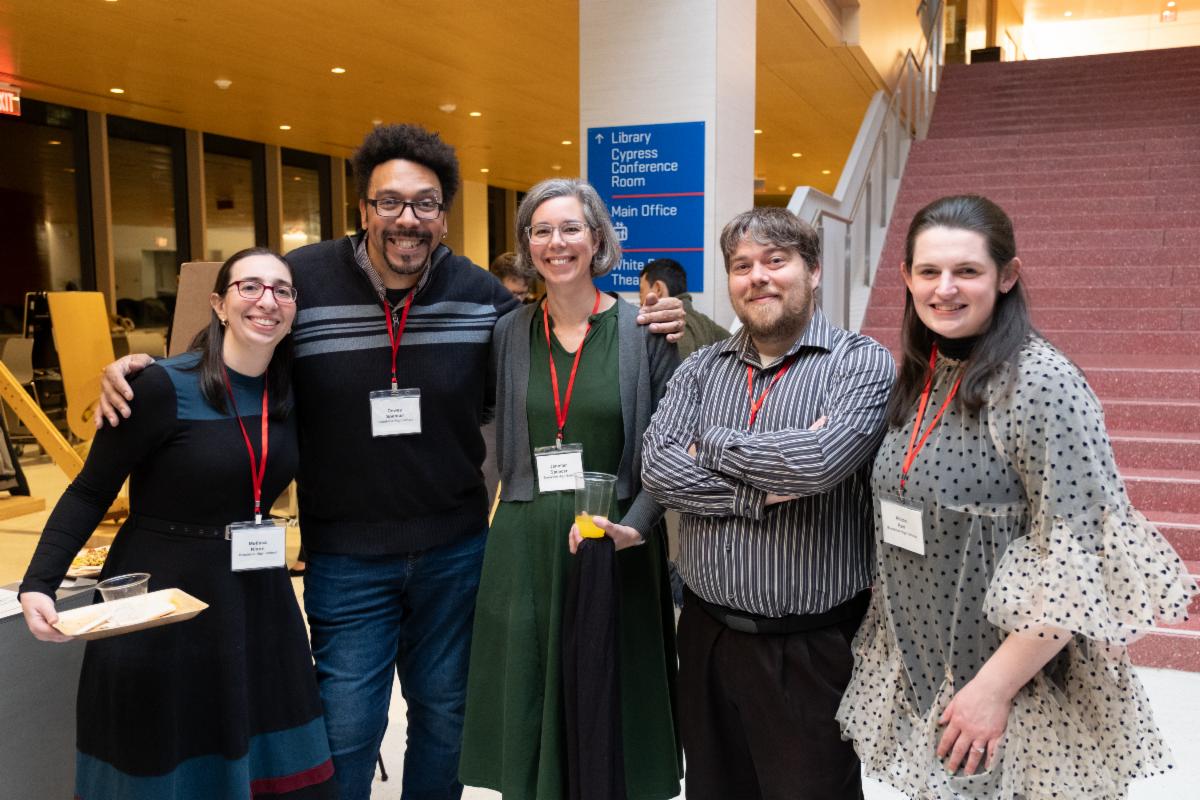
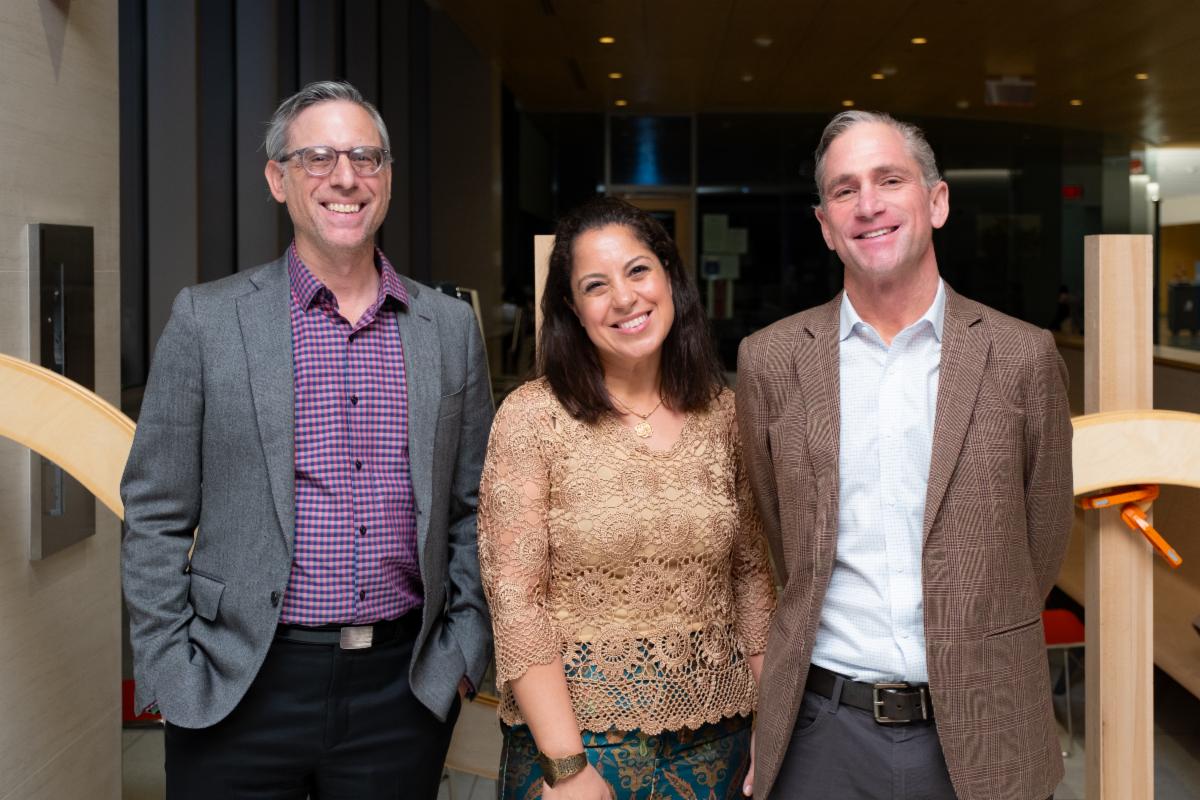
Co-Chairs, Ben Stern (L) and Rob Lawrence (R), Vice Chair, Mona Mowafi (C) and Treasurer, David Weisner (no shown) will continue as the strong and stable officers of the Board of Directors.
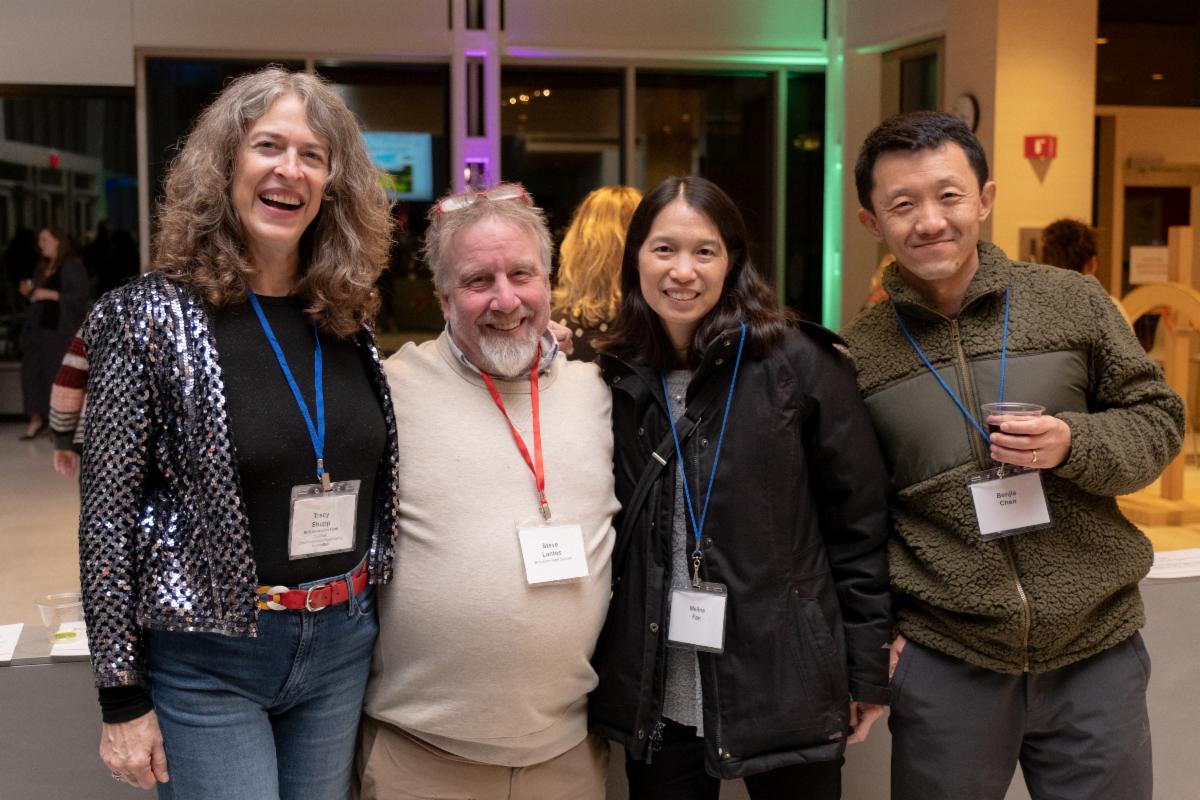
THANKS TO OUR RETURNING LEADERS: Jennifer Amigone, Ronit Antebi-Hadar, Maria Arado-McDonald, Annemieke Atema, Oliver Bardon, Sara Berkson, Kimberly Castro, Susan Dubin, Cher Duffield, Elizabeth Gardner, Natasha Goldman Homann, Melissa Hale Woodman, Peter Johannsen, Gene Keselman, Adi Kitov, Anne Le Brun, Nancy Lee, Andrew Liteplo, Jodi Maciag, Katerina Makatouni, Dwight Mathis, Robert Neer, Charu Puri-Sharma, Rahim Rajpar, Tracy Shupp, Eli Silk, Lesley Solomon, Sumeet Sabharwal, Dawn Tringas, Audrey Winter-Driben
WE APPRECIATE YOU: Fund volunteer leaders are also passing on the baton this year:Helen Cheng, Seth Finkelstein, Deborah Fung, James Kessler, Mary Lochner Hurwitz, Meghan McGrath, Polly Ribatt, Eric Sillman, Jennifer Wells, and Molly Yancovitz. All the best to you, your wonderful families, and especially your BHS graduates!
WHO WE ARE
Join Us – Celebrate Innovative Academics at BHS!
MARK YOUR CALENDARS!The biggest fundraiser of the year for Brookline High School – an evening of community, celebration, and support for innovative academics for all BHS students.
WANT TO GET INVOLVED?We’re actively recruiting volunteers over the summer to help out this fall.Have ideas or energy to contribute? Contact the Host Committee team!
STAY TUNED FOR DETAILS!
“Our Innovation Fund is incredibly valuable – not just for the high school, but for me personally. It helps us launch new courses and programs, attract and retain outstanding teachers, and make a real impact on these kids.”- Anthony Meyer, Head of School
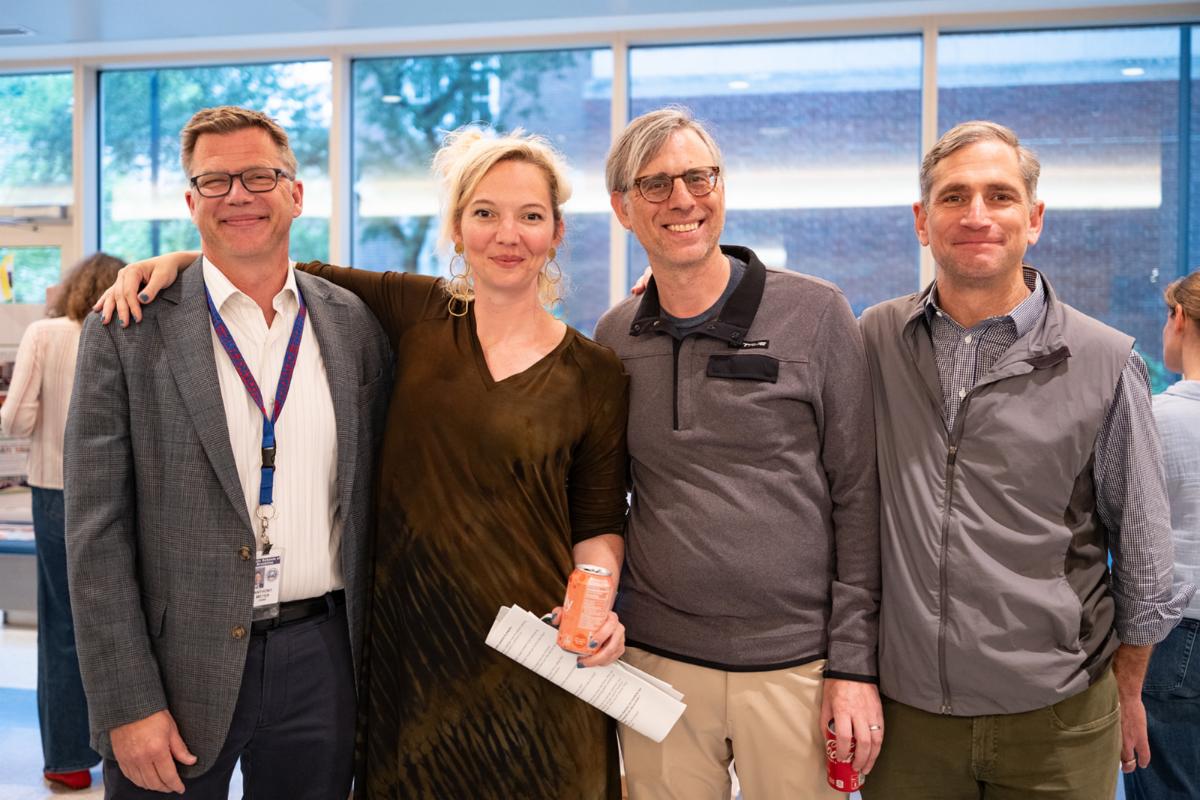
Left to Right: Anthony Meyer (BHS Head of School, Erica O’Mahony (BHS Innovation Fund Faculty Liaison, Ben Stern & Rob Lawrence (BHS Innovation Fund Co-Chairs)
HONOR SOMEONE’S HARD WORK! Proud of a loved one’s accomplishments in the 24/25 academic year? Show it with a gift in their honor
DONATE
At the Brookline High School Innovation Fund, our mission is to catalyze innovation at BHS by supporting faculty-driven curricular initiatives that will inspire our students and prepare them to thrive in a changing world.

w

Contact

  • bhsinnovationfund@psbma.org
  • 617-713-5201
  • 115 Greenough St Brookline, MA 02445

Connect

© 2026 BHS INNOVATION FUND